
Quiet comfort, stored inside the room.
PCM can sit inside cabinets, HVAC products, walls, ceilings, or floors. It absorbs heat when the room gets warm and releases it when it cools — smoothing indoor temperature with comfort, silence, and lower energy peaks.
We are the material inside, not the equipment.
Our downstream customers are building HVAC and energy-system manufacturers. They take our phase-change materials and build the product — air conditioners, heat pumps, water heaters, and energy-storage systems — owning the equipment design and the system patent.
Passive Edge supplies the PCM chemistry, encapsulation, and phase-point tuning; the partner ships the product. It lets OEMs add latent thermal storage without becoming a materials company.
Hot-water heat bank
A major home-appliance manufacturer integrates our PCM into water heaters — banking heat so hot water holds through demand peaks and off-peak charging windows.
Heat-pump thermal store
A European heat-pump company builds thermal storage on our materials — storing heat-pump output to decouple comfort from when electricity is cheapest and cleanest.
AC · heat pumps · storage
The same UltraST core drops into air conditioners, heat pumps, and building energy-storage systems. Bring the equipment; we tune the phase-change temperature and chemistry.
Lightweight buildings have no thermal memory.
1. Indoor temperature follows the sun. Modern lightweight construction heats up fast in the afternoon and cools fast at night. Without thermal mass, the room temperature tracks the outdoor swing — and the HVAC chases it all day.
2. Peak demand is expensive and dirty. Cooling load peaks exactly when the grid is most stressed and electricity is most carbon-intensive. Shaving and shifting that peak is worth more than the kWh alone.
3. Concrete mass is crude. Heavy structure adds memory but you can’t tune where it acts. A phase-change layer concentrates that thermal memory at one temperature — the comfort band — and packs it into a thin mat.
Inspired by the PCM that NASA put in spacesuits to hold astronauts in their comfort band, a PanSure® mat behind the finish turns each surface into a storage terminal: it absorbs the daytime heat peak and releases it after hours — with no change to the existing system.
Representative indoor profile
Passive surface, or active store.
PanSure® PCM climate mat
A thin, flexible PCM mat installed behind drywall, ceiling, or floor. It works entirely passively — charging from the room when it’s warm, releasing back when it cools — and retrofits without touching the HVAC.
- PHASE POINTTuned to the comfort band (~22–26 °C)
- INSTALLBehind wall · ceiling · floor finish
- SYSTEMPassive — no pumps, no controls
- FIT FORHomes, offices, base stations, retrofits
Home Thermal Vault
A compact shape-stabilized PCM store that charges from off-peak power or a heat pump and dispatches heating or cooling into the loop when it’s needed — decoupling comfort from when energy is cheapest and cleanest.
- COREPASSIVE EDGE® ultra-high-conductivity shape-stabilized PCM
- CHARGEOff-peak grid · heat pump · solar-thermal
- CONTROLHVAC-AI scheduling & dispatch
- FIT FORVillas, smart homes, comfort + bill shift
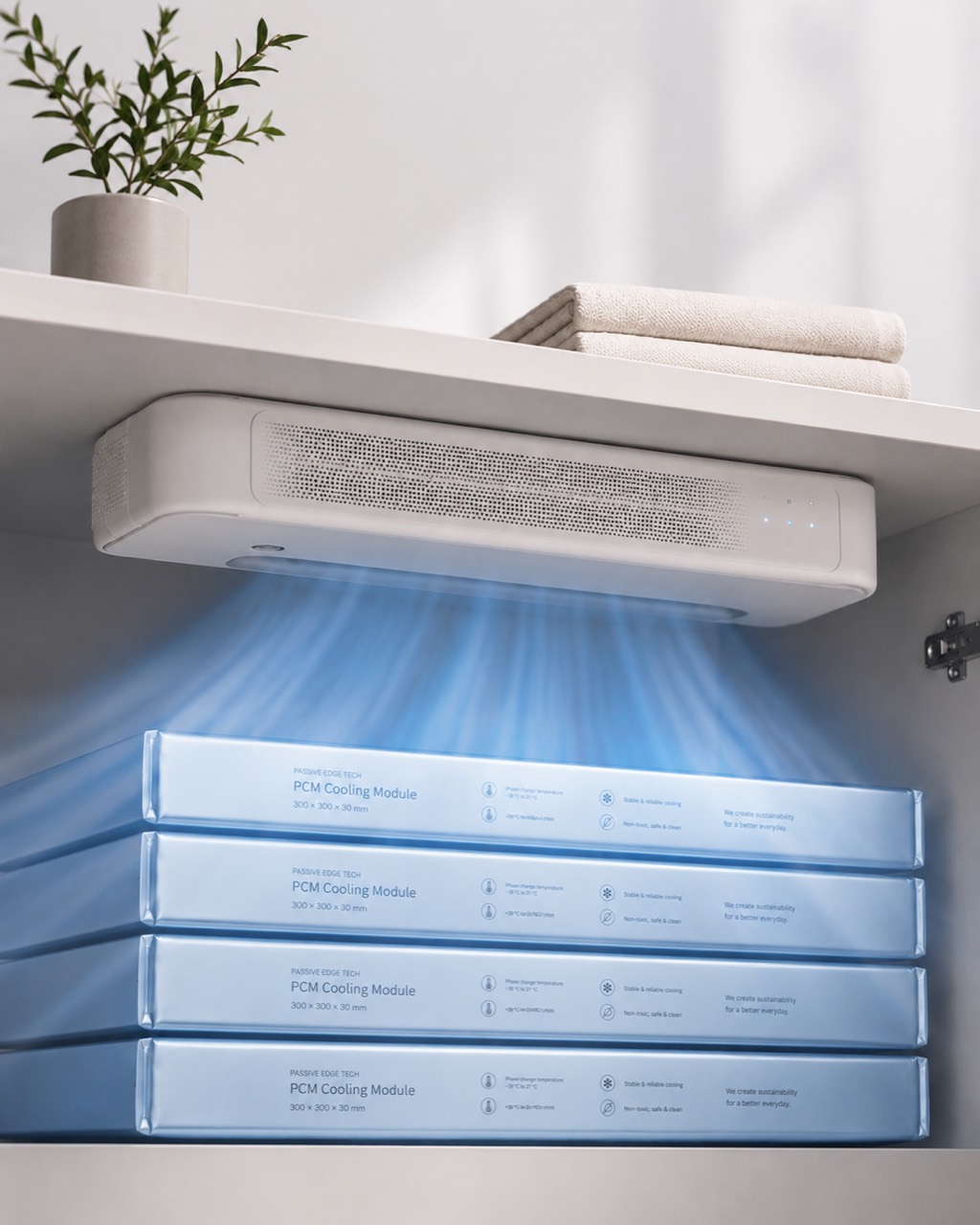
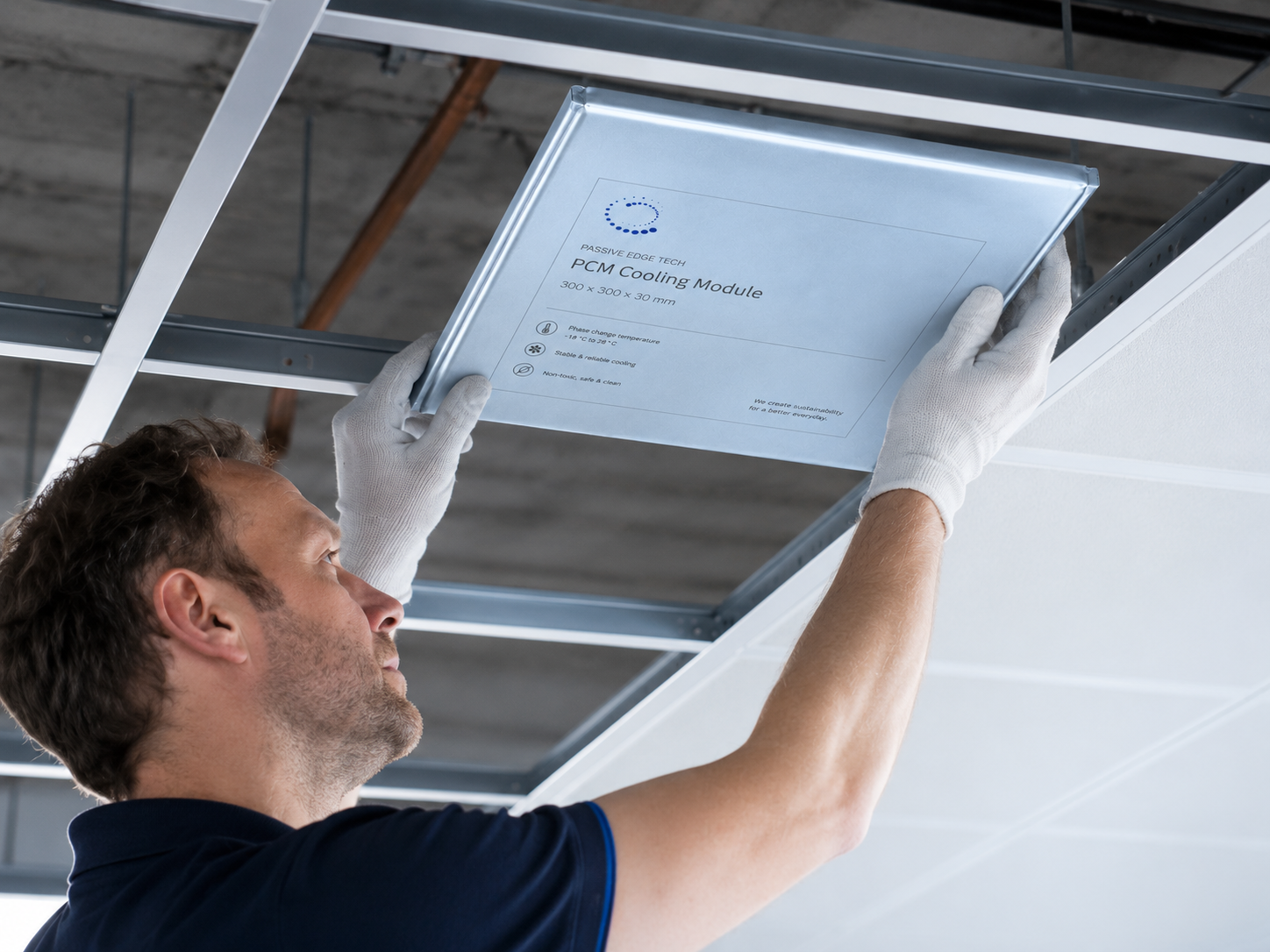
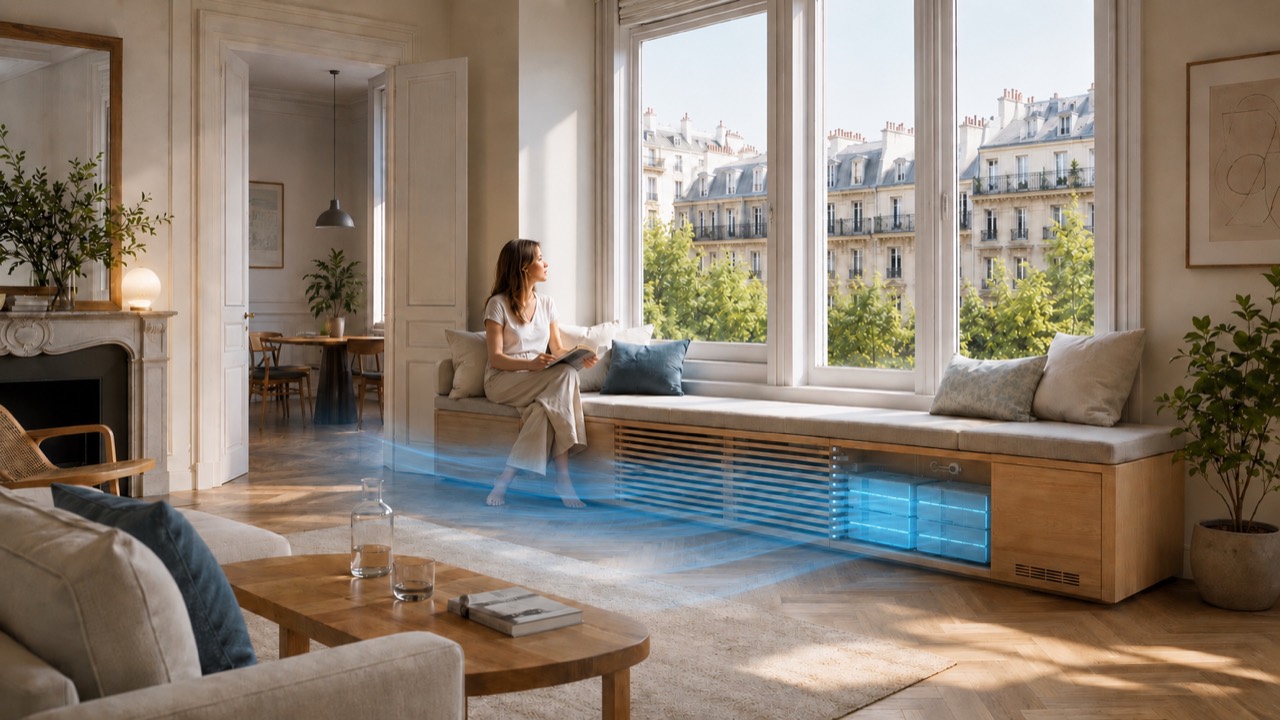
Passive comfort modules inside ceilings and window-side cabinets.
edge comfort uses 22-32 °C inorganic UltraST PCM modules to place thermal buffering inside room-side architectural details. T3 and T5 thicknesses are now separated as individual products in the PCM cost library for samples, quoting, and project assessment.
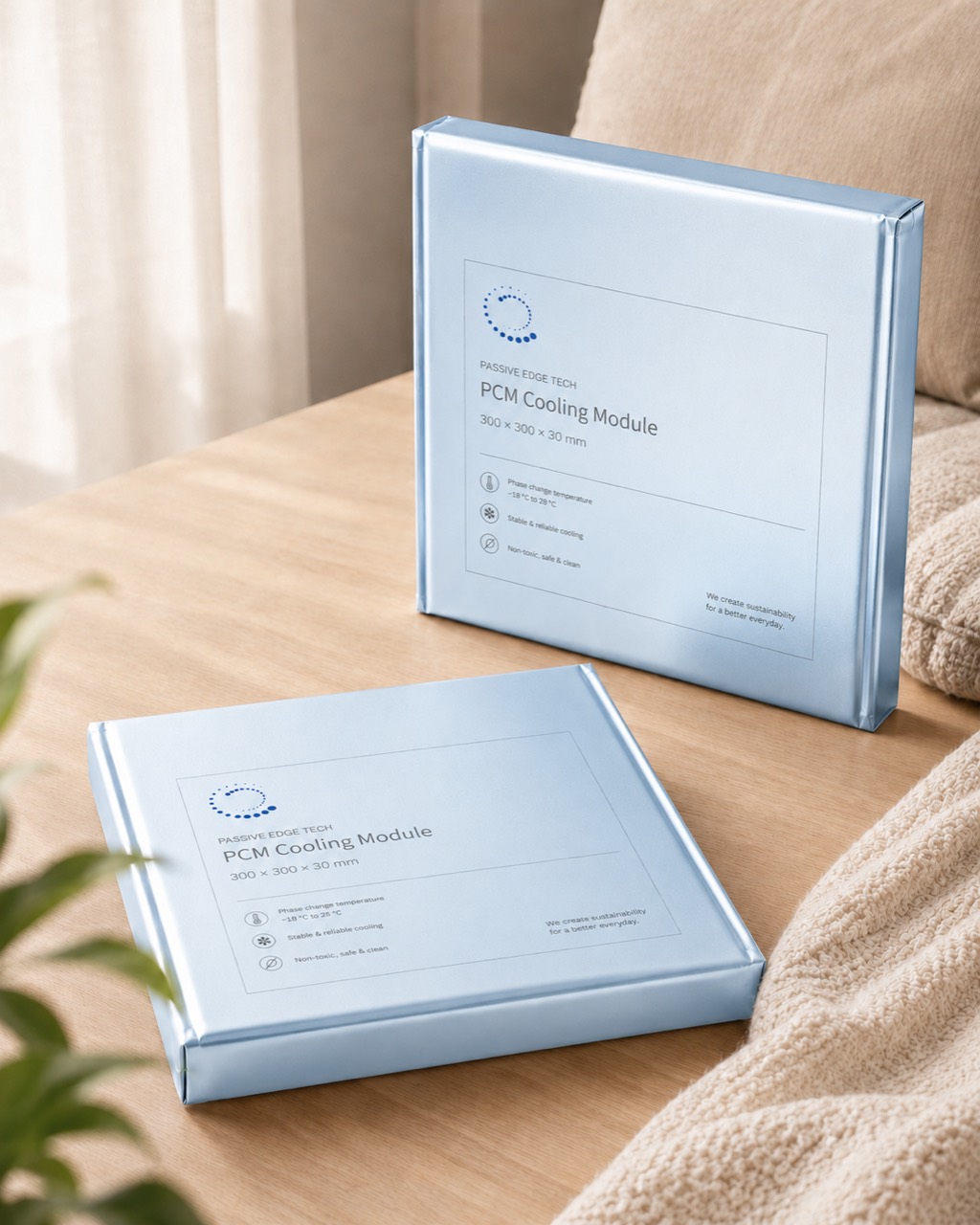
edge comfort / 季适
A passive indoor thermal-comfort module for homes, offices, hotels, and retrofit projects. It is not sold as a standalone air conditioner; it is an embeddable PCM thermal-buffer module for ceiling cavities, ventilated window cabinets, and interior equipment spaces.
Final phase-change temperature, installed area, and airflow path should be confirmed against room load, envelope, occupancy schedule, and pilot data.
One PCM platform, many surfaces.
PanSure® climate mat
The radiant PCM terminal for wall, ceiling, and floor. Passive, retrofit-friendly, and the backbone of the smart climate system.
Cool Phase comms cooling
A smart PCM energy-saving cooling system for telecom base stations and equipment rooms — cutting cooling energy where heat runs around the clock.
PCM glass · curtain · mural
Phase-change building elements — glazing, curtains, and decorative panels — that fold thermal storage into the finishes themselves. Patents pending.
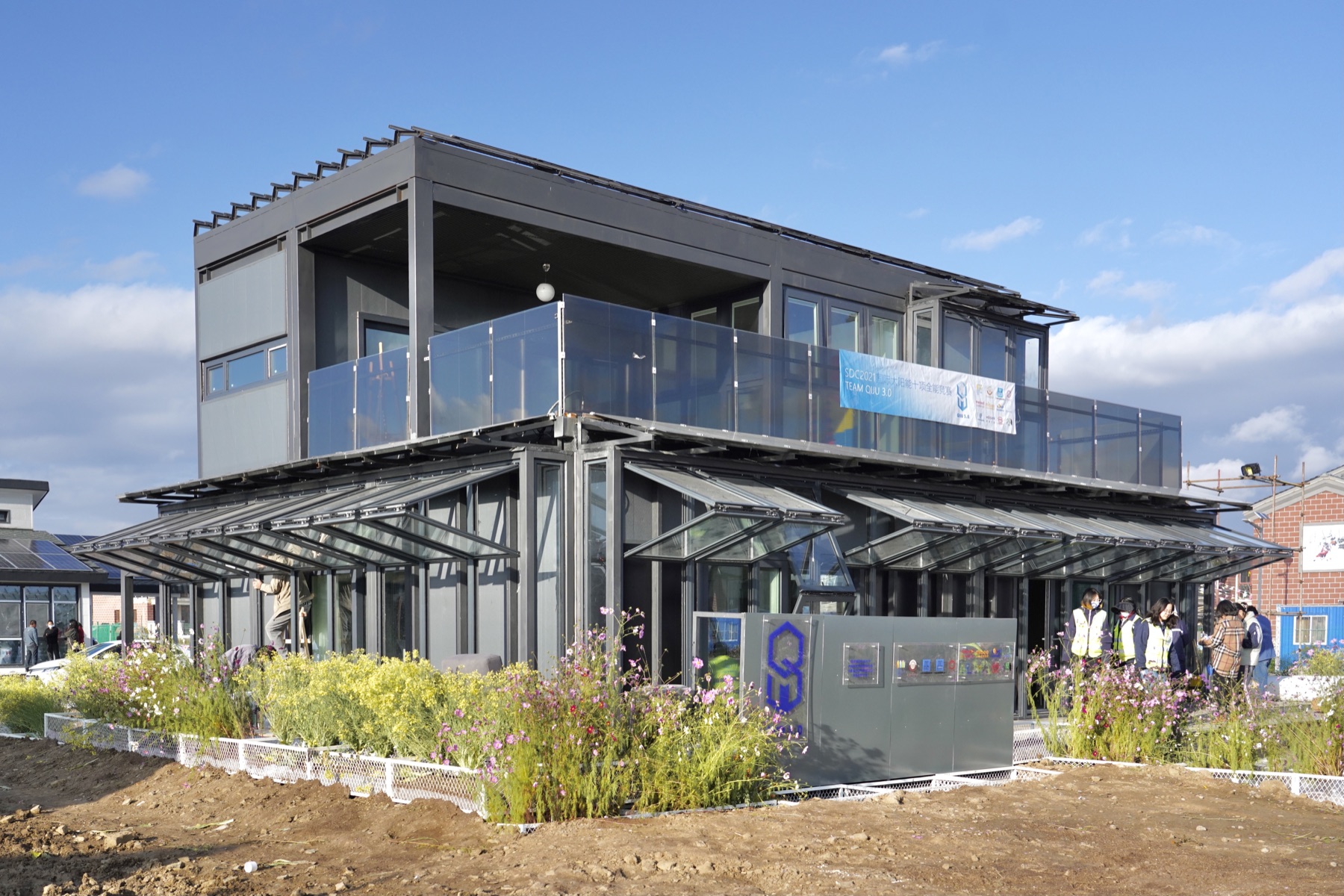
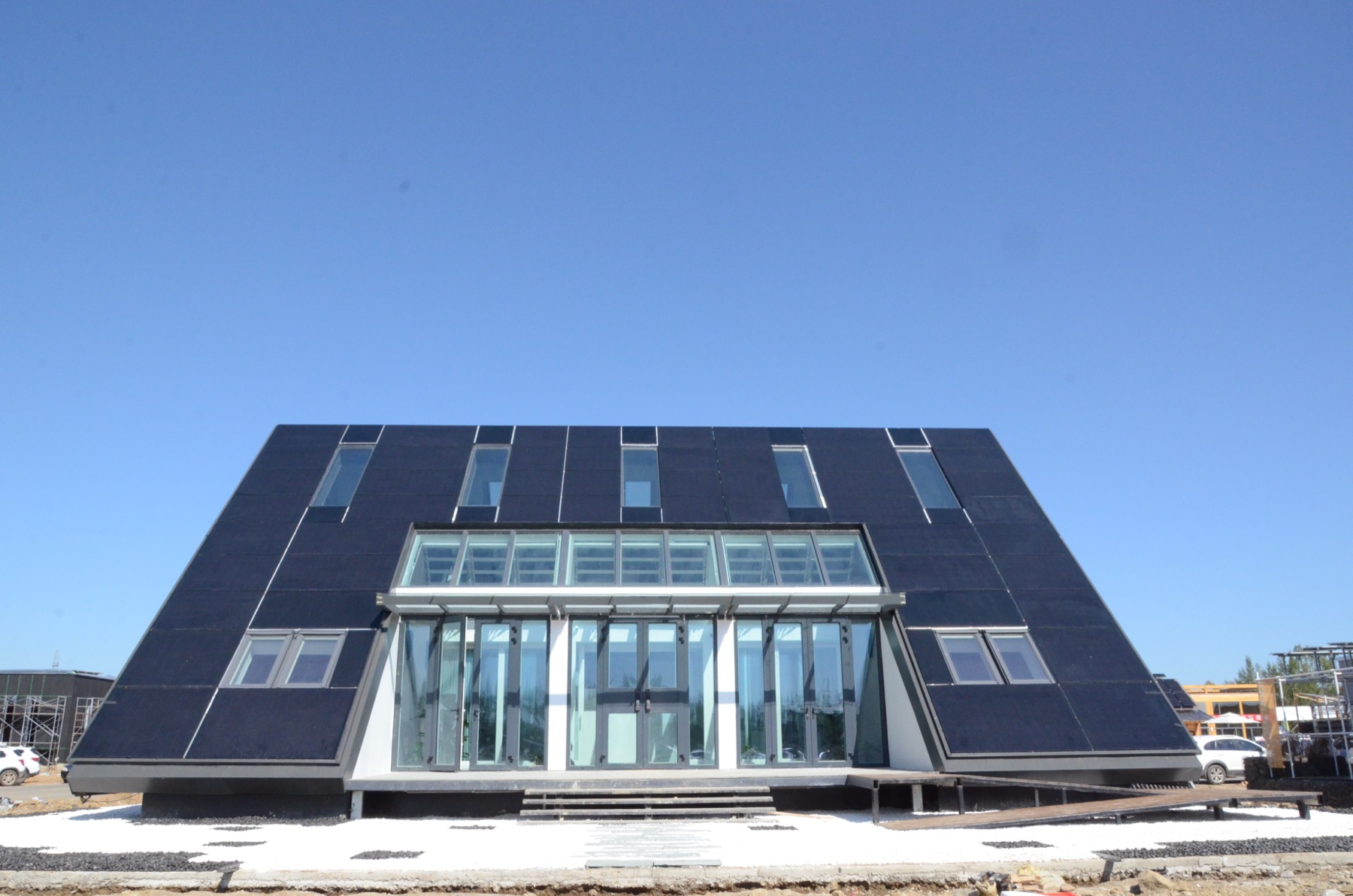
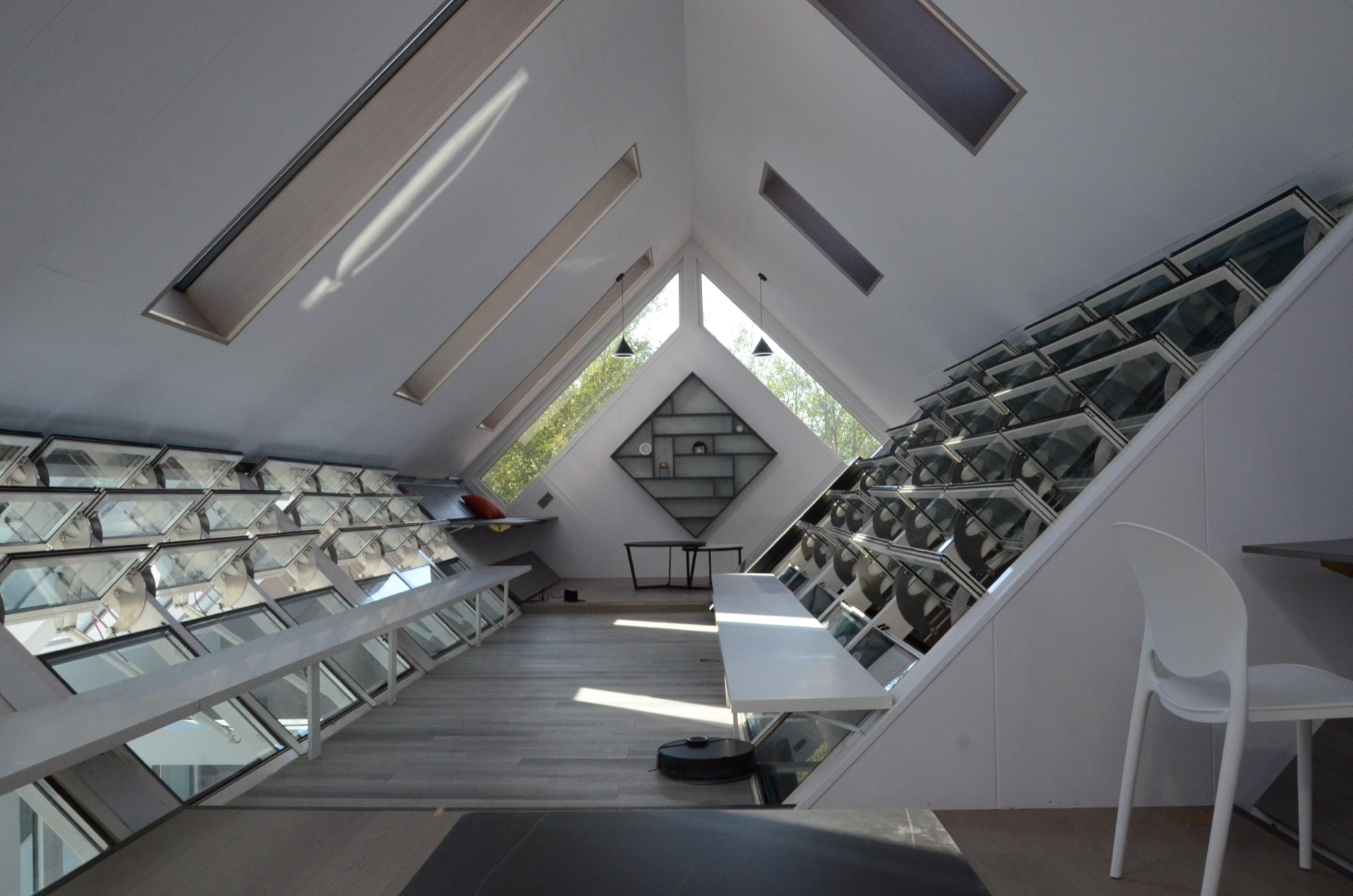
Inside two Solar Decathlon net-zero homes.
At the Solar Decathlon China net-zero building competition in Zhangjiakou, fifteen zero-carbon houses became part of a national new-energy demonstration base.
Working with two of China’s leading architecture schools, Passive Edge supplied the PCM wall storage & temperature-control system for both Qiju 3.0 (Xi’an University of Architecture & Technology) and Pitched House (Chongqing University). Both buildings posted strong energy performance and were widely recognised.
Tell us about the building.
The more of the following you can share early, the faster we can return a useful response. None of these constitute a commitment from either side.
Have operating data? Explore sizing tools
From a pilot room to a whole building.
Building profile submitted
You share building type, comfort target, HVAC, tariffs, and available surfaces. We return a written fit assessment within ~5 business days.
Surface & system design
Joint review of phase-change temperature, mat placement, and whether an active Thermal Vault adds value — with predicted swing-reduction and load-shift figures.
Pilot room
A scoped pilot in a representative room, instrumented for indoor temperature and energy use across day / night cycles.
Building validation
Pilot data review against predicted performance. Decisions to scale across the building or portfolio are made on measured evidence.
Build your internal case.
edge comfort / 季适 product resources
Download the 22-32 °C overview manual for ceiling and window-side passive comfort module planning.
Net-zero application note
Integration patterns for homes, offices, and base stations, the Solar Decathlon case detail, and load-shift sizing worksheets.
Pilot room test plan
Editable template covering instrumentation, day / night protocol, success criteria, and reporting against predicted swing and energy.
Share your building, comfort target, and tariff structure.
How it works
- Room and heat exchange environment
- PCM modules in the ceiling
- Module enclosure and support
Suitable cool conditions solidify the PCM and prepare it to absorb heat.
As the room enters the selected temperature range, PCM absorbs some heat and moderates fluctuations.
A sufficiently cool environment removes stored heat and restores capacity for the next cycle.
Structures and cycles illustrate the principle. Selection, capacity and performance depend on operating conditions and validation.