
Products & technology

Cold rooms & cold chain

Use UltraST PCM to keep cooling available when needed. Design cold-room peak shifting, transport buffers and pharmaceutical packaging around their temperature windows, heat-transfer conditions and reuse processes.

  • Longer temperature window
  • Faster thermal response
  • Cooling available on demand
Cold-chain transport
Cold-chain transport ↗
Cold-room storage
Cold-room storage ↗

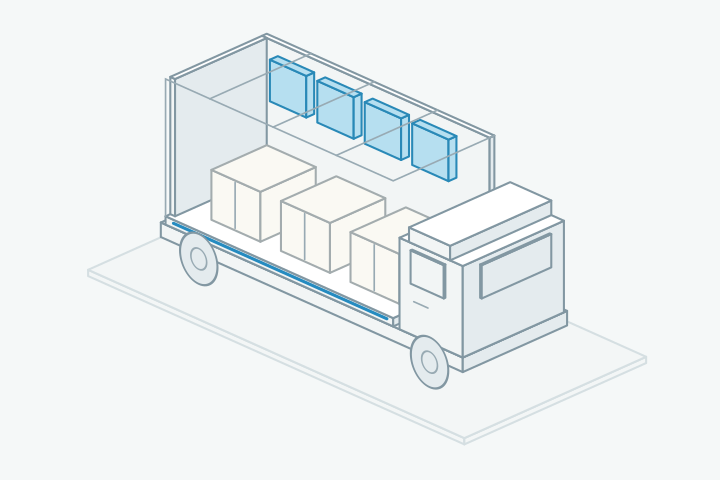
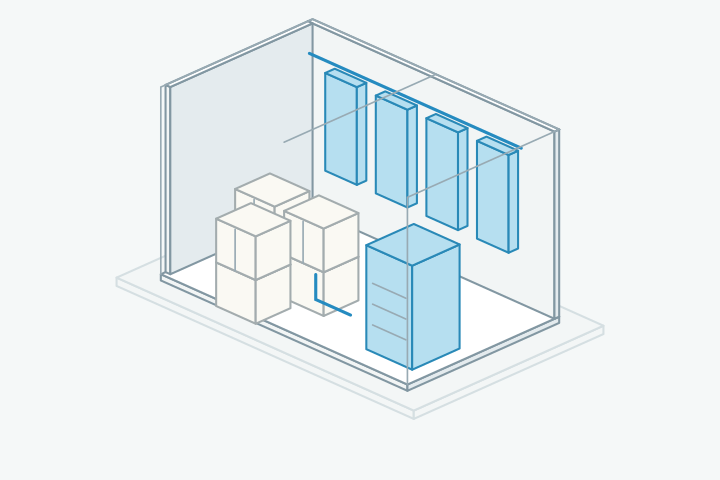
Conceptual product placement; blue indicates PCM storage components.

From cold rooms to pharmaceutical transport.

One thermal-storage material platform, with temperature windows, heat transfer and reuse designed for two distinct applications.

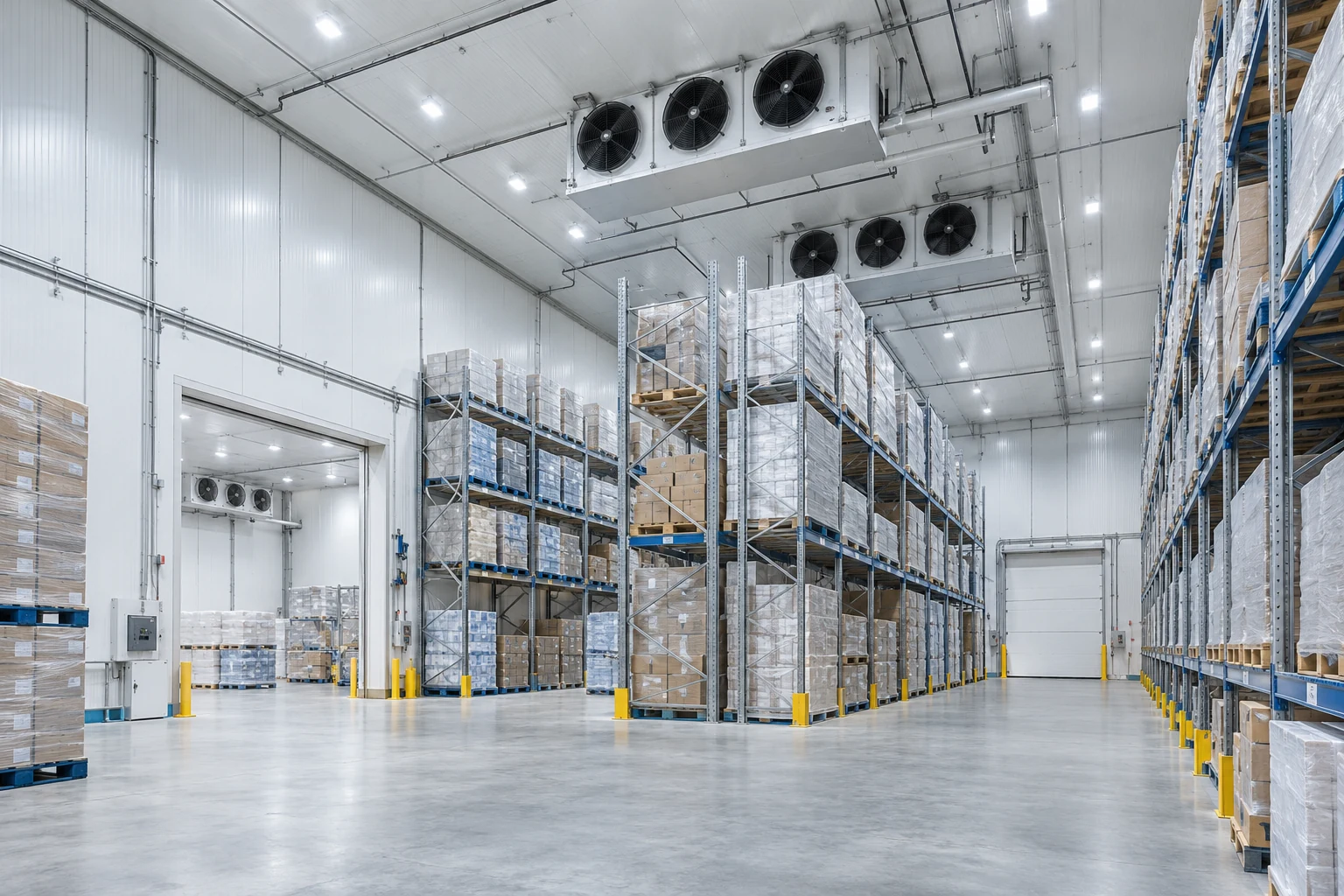
AI-generated illustration of a large modern cold store with high-bay pallet racks and ceiling refrigeration units
Cold rooms and cold-chain transportAI-generated scene illustration · Not an actual project photograph

01 / Cold rooms and cold-chain transport

Keep cooling available for when it is needed.

Add dispatchable cooling capacity for storage, loading and transport.

  • Charge with off-peak power and solar

    Store cooling at lower-cost times and release it at peak demand; evaluate savings against actual tariffs and loads.

  • Buffer door openings and interruptions

    Respond to loading, open doors and changing heat loads to add temperature-control margin.

  • Modular deployment and reuse

    Size plates for airflow, structural loads and cargo space; validate charging, discharge and turnaround.
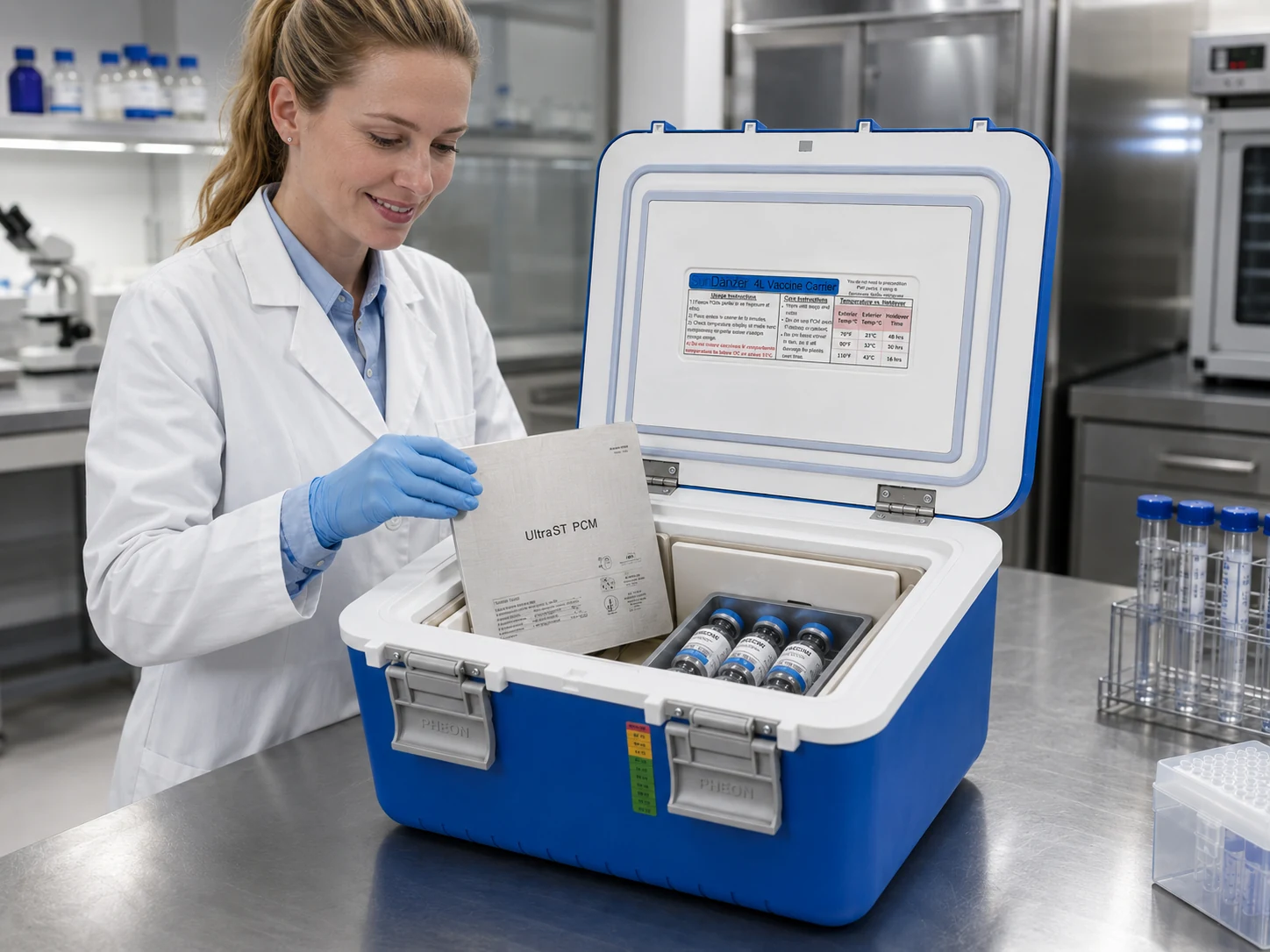
UltraST PCM pharmaceutical packaging concept
UltraST PCM pharmaceutical packaging conceptApplication concept: PCM modules arranged around temperature-sensitive cargo.

02 / Pharmaceutical transport and thermal packaging

Build transport margin around the cargo temperature window.

UltraST PCM in a selected temperature range works with encapsulated plates, insulated packaging and a defined conditioning process.

  • Establish the cold environment faster

    The conductive network helps PCM respond to heat loads; validate pull-down with the box, payload and conditioning process.

  • Extend the temperature buffer

    Latent heat absorbs incoming heat; size capacity for cargo limits, ambient profiles and transit duration.

  • Support validated reuse

    Shape-stabilised material reduces liquid migration paths; verify seals, drops, cycling and route temperature records.

Temperature windows and holdover times require complete-package and route validation; material data or a single comparison test cannot replace it.

Products and core advantages

Cold-chain transport

Faster thermal response. More time for your cargo.

UltraST combines a conductive composite network, shape stability and latent heat: heat reaches the material faster, cooling fits within limited packaging space, and liquid leakage paths are reduced. High-enthalpy, low-supercooling material selection matches storage capacity and conditioning temperature; validate heat transfer in the actual box, pallet shipper or vehicle.

One test. Two samples, side by side.

One test. Two samples, side by side.

Later means more temperature margin

Cargo first exceeds 6°C

UltraST sample39.6 h
Reference ice pack28.2 h

11.4 h later · about +40%

Less time means faster initial cooling

Box air first falls below 8°C

UltraST sample10.2 min
Reference ice pack26.4 min

16.2 min less waiting · about −61%

Both sets contain 3.21 kg net PCM

Gross mass of three modules

UltraST sample3.93 kg
Reference ice pack4.11 kg

Volume of three modules

UltraST sample5.17 L
Reference ice pack5.67 L

Mass −4.4% · volume −8.8%

Source: 5°C cold-chain PCM comparison report, March 2026, pp. 5, 8 and 9. Ambient 12°C; 45 L insulated boxes; three plates and 3.21 kg PCM per set; cargo probe inside a water bottle. 6°C is this comparison's threshold, not a universal compliance limit. Results apply to the tested samples and conditions, not every T3/T5 variant or transport route.

Transport products and advantages

Cold-room storage

Store cooling when electricity costs less. Release it when needed.

Standard PCM plates and partner equipment add a dispatchable cooling reserve to existing cold rooms. Materials, heat exchange and controls work together to support cost management, stable temperatures and practical retrofits.

01 / Electricity cost

Shift peak loads and use surplus solar

Charge off-peak or with surplus solar; release cooling during peak periods to reduce expensive refrigeration loads and demand pressure. Include storage losses and auxiliary electricity in the assessment.

02 / Temperature stability

Buffer door openings and cooling interruptions

Absorb heat during loading, load changes and short outages to slow temperature rise and provide response time. Coordinated controls can reduce compressor short cycling.

03 / Retrofit

Modular deployment, starting with one room

Use floor stacks, racks or in-room modules. The SolarCool Kit approach can reduce alterations to refrigerant piping; assess airflow, loading, access and available space.

Cold retention and operating costs.

Cold retention and operating costs.

Historical partner equipment comparison

These figures come from Solar Tribe / SolarCool Kit comparisons cited on the previous website. The original test report and full operating conditions have not yet been recovered. They remain historical results awaiting source verification, not a performance promise for UltraST material or every cold room.

Comparison metricSolarCool KitReference ice boxes
Cooling time in the 2 h quick test60 min115 min
Retention after refrigeration stops21.67 h9.08 h
Temperature rise rate0.300 °C/h0.837 °C/h
Daily compressor starts2 /day45 /day

41.6%

Electricity cost under an 8 h charging strategy

Historical partner material reports 41.6% lower electricity cost. This is a cost result for a particular operating strategy, not 41.6% less electricity consumption. Tariffs, loads, auxiliaries and losses still need to be checked against the original source.

Results depend on temperature, load, tariffs and heat exchange. Electricity cost savings and energy reduction are assessed separately; no universal savings rate or holdover duration is promised.

Cold-room solution and advantages

ULTRAST / MATERIAL SCIENCE

How material strengths become application value.

Transport calls for cargo margin and initial cooling; cold rooms call for dispatchable capacity, repeat charging and cost control.

01 / High conductivity: move heat into PCM faster

Speed initial box cooling and improve cold-room module response.

A continuous three-dimensional graphite network provides heat paths and reduces internal heat-transfer bottlenecks in UltraST.

Data and validation basisComparative test: box air below 8°C in 10.2 vs 26.4 min

02 / Shape-stable, leak-resistant design

Reduce liquid migration and contamination pathways in transport and storage.

Pore confinement and the composite skeleton hold the PCM core, reducing migration and liquid-leakage pathways after melting.

Data and validation basisProduct validation: seals, drops, puncture and condition after thermal cycling

04 / Low supercooling: solidify nearer the target range

Complete solidification within the selected charge range for scheduled operation.

Reduce delayed solidification so the material can store cooling or release solidification heat closer to its intended temperature range.

Data and validation basisMaterial: solidification onset; system: complete recharge curve

05 / Stable cycling: recover capacity repeatedly

Retain usable capacity after repeated handling and charge/discharge.

Confinement limits component migration and phase separation to support thermal performance over repeated charge/discharge cycles.

Data and validation basisDurability: post-cycle enthalpy, shape and encapsulation integrity

06 / Flame retardancy for safer integration

Include material combustion performance in vehicle and warehouse selection.

Flame-retardant selected UltraST formulations work with encapsulation; combustion performance is assessed for the material and finished product.

Data and validation basisTest documentation: combustion performance of the selected formulation and package

UltraST targets high conductivity and enthalpy, low supercooling and stable cycling, with shape-stable leak-resistant design and flame-retardant selected formulations. Metrics apply to the selected formulation, temperature range and product; microcapsules are assessed for their own materials and processes.

Two uses. Two integration approaches.

Transport containers & vehicle units
Conceptual product placement; blue indicates PCM storage components.

01

Transport containers & vehicle units

UltraST T3 / T5 · Encapsulated PCM plates

Product placement
Fit in box liners and pallet containers, or partner-engineered ceiling, sidewall and airflow units in vehicles.
Application benefit
Charge before departure; absorb heat during loading, door openings and short cooling gaps, then recharge at the destination.
Cold rooms & frozen storage
Conceptual product placement; blue indicates PCM storage components.

02

Cold rooms & frozen storage

Standard PCM plates · Partner storage equipment

Product placement
Integrate with racks, ceilings, sidewalls or in-room units, retaining airflow and maintenance access.
Application benefit
Charge with off-peak power or solar generation and discharge during peaks and door-opening periods. Solar Tribe integrates and delivers SolarCool Kit.

EXPLORE FURTHER

Technical resources & validation

Performance and available capacity depend on the product, operating conditions and validation.

From material platform to deployable module.
03 / Material & System options

From material platform to deployable module.

— Material option

UltraST PCM + SemiST plates

Specify Passive Edge cold-side chemistries into your own cooling-battery design. Use SemiST PCM plates as the storage element, with chemistry tuned to your room’s setpoint window.

  • PHASE POINTTunable, sub-zero to +10 °C window
  • FORM FACTORPlates · Modules · Custom geometry
  • DELIVERSMaterial + technical data package
  • FIT FORRefrigeration integrators with in-house design capacity
— Integration option · via Solar Tribe

SolarCool Kit (UltraST inside)

Solar Tribe integrates UltraST PCM into equipment that charges, retains and releases cooling on demand. Installation, heat exchange, controls and system performance depend on the equipment design and site conditions.

03 · The integration option in detail

Store cooling when electricity costs less. Release it when needed.

— System section · SolarCool Kit
SolarCool Kit system-section line diagram Line diagram showing the device body, enlarged PCM plate layers, and charge, lock, release airflow paths. 01 CHARGE 02 LOCK 03 RELEASE Enlarged PCM layers
STACKED PCM BATTERY · AIR ASSISTED HEAT EXCHANGE / CHARGE · LOCK · RELEASE

Solar Tribe integrates UltraST PCM into equipment that charges, retains and releases cooling on demand. Installation, heat exchange, controls and system performance depend on the equipment design and site conditions.

  • Charge during off-peak and solar windows

    Increase heat exchange while refrigeration is available to store cooling in PCM. Verify charging power and duration for the equipment and site.

  • Retain cooling outside the target period

    After charging, equipment airflow and controls reduce heat exchange to limit early release. Retention is a system operating strategy that requires suitable equipment.

  • Release for peaks and disturbances

    Use the reserve during tariff peaks, door-opening peaks or outages. Verify fans, controls and backup power when assessing outage operation.

Phase 01 · Charge

Charge during off-peak or PV hours

When the chiller is running on lower-cost electricity, the module converts that energy into in-room cold capacity. It can support overnight off-peak charging and midday PV self-consumption.

Phase 02 · Lock

Keep the buffer for later

After charging, the module reduces heat exchange so cold is not wasted during low-load periods. The buffer remains available for peak tariffs, outages, or door-opening disturbances.

Phase 03 · Release

Release when the room needs it

When room temperature rises or demand-response events arrive, stored cold helps cover the heat load and lowers compressor response pressure.

See the comparison and conditions above ↑

These figures come from Solar Tribe / SolarCool Kit comparisons cited on the previous website. The original test report and full operating conditions have not yet been recovered. They remain historical results awaiting source verification, not a performance promise for UltraST material or every cold room.

Explore the SolarCool Kit product site ↗ Equipment by Solar Tribe · UltraST inside
A micro/nano-encapsulation platform at the core — co-building a global thermal-buffer ecosystem.
— Partnership model · EDGE Material Inside

A micro/nano-encapsulation platform at the core —
co-building a global thermal-buffer ecosystem.

We build the material; partners build the equipment. Cold-room cooling-battery modules like the one shown above are not Passive Edge equipment — they are co-developed with downstream partners under our EDGE Material Inside model: Passive Edge supplies UltraST PCM material and chemistry, while the partner designs, manufactures, certifies, and sells the equipment.

The system you see here is an example: equipment patent and commercial ownership sit with Solar Tribe, who builds the cooling-battery system around our material. We deliberately stay in the material layer — it’s how we let many industries get to a thermal-buffer outcome without anyone competing for the same customer.

If you’re an OEM, system integrator, or refrigeration specialist evaluating cold-storage applications, Discuss this application — we match end-customer opportunities with the right partner and advance the account together. For products partners build around UltraST PCM, Passive Edge can also support channel representation and project rollout.

For large energy users with clear savings targets, the model can extend into an energy-finance layer: we can help introduce funds, energy performance contracting, or finance leasing so verified energy savings support deployment with lower upfront capital pressure.

— Layer 01

Passive Edge · Material

UltraST PCM, chemistry, encapsulation, technical data package.

— Layer 02

Solar Tribe · Equipment (SolarCool Kit)

System design, equipment patent, manufacturing, certification, sales. View product ↗

— Layer 03

Cold storage operator

End customer: refrigeration warehouse, 3PL, food & beverage facility.

— Layer 04

Finance layer · Funds / contracts / leasing

For high-consumption customers, capital and energy-service mechanisms can let verified savings carry the rollout.

— 01
We don’t build competing equipment.

We stay focused on material, data packages, and technical support rather than competing with partner systems.

— 02
Partners own the system.

Equipment patents, brand, manufacturing, and customer delivery boundaries are led by the partner.

— 03
We develop customers together.

Opportunities are matched with the right partner and advanced jointly; partner products can also be represented through our channel when it helps deployment.

How it works
Cold storage & cold chain · Application principle
  1. Cold room and circulating air
  2. PCM plates inside partner equipment
  3. PCM layers and heat exchange passages

Charge the PCM unit during off-peak hours or other periods when cooling is available.

Structures and cycles illustrate the principle. Selection, capacity and performance depend on operating conditions and validation.

Related resources Discuss this application
Sizing tools
05 / 24-hour operation & sizing tool

Turn cheap power during the day into cold that is available when the room needs it.

The value is not just adding a cold source; it is shifting compressor operation around tariffs, PV generation, door-opening peaks, and outage resilience.

22:00

Off-peak charging

The refrigeration plant charges PCM during low-price electricity windows.

06:00

Cold lock

The charged module preserves cold capacity for later risk periods.

08:00

Morning peak stability

Door openings and turnover add heat load; stored cold helps suppress drift.

11:00

PV top-up

If rooftop PV is available, midday generation can become stored cold.

17:00

Peak release

Stored cold offsets compressor load during high-price periods.

Event

Outage buffer

If active cooling stops, PCM buys more time before product temperature is at risk.

Application footage

Discuss this application

Start with your operating conditions.

Transport: temperature window, duration, openings and charging conditions. Cold rooms: temperature, volume, cooling capacity, load schedule and tariffs.

Define the conditionsSelect materials and structureValidate samples in use
Discuss this application