PCM thermal buffering
Absorb heat as temperatures rise and release it as they fall, adding thermal inertia.

Edge Comfort · New
Edge Comfort PCM interior panels
Six board families bring phase-change thermal buffering to decorative surfaces, partitions, floors and insulation. Materials, finishes and comfort, designed together.
Thermal comfort · Factory-finished delivery
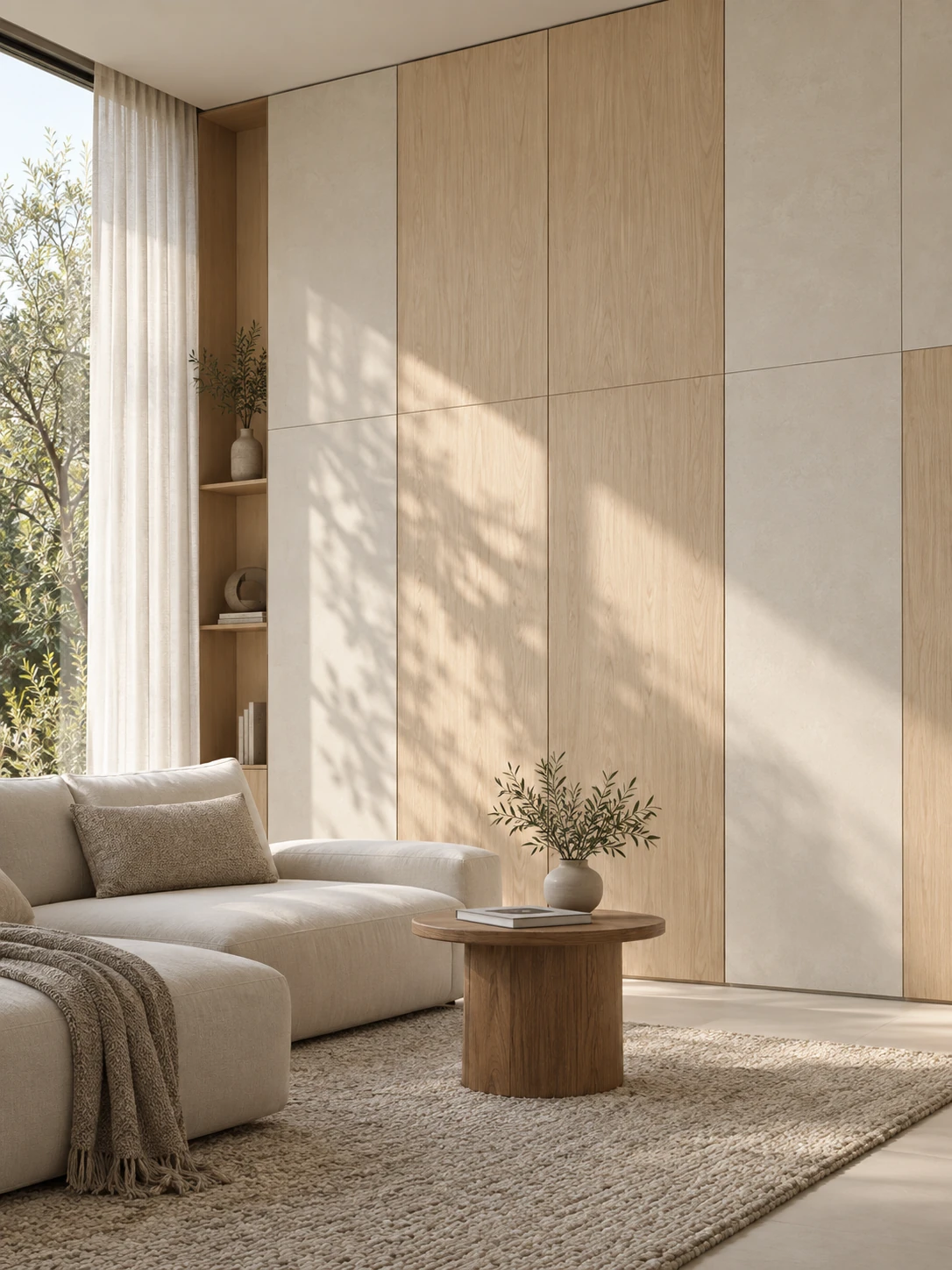
Absorb heat as temperatures rise and release it as they fall, adding thermal inertia.
Combine the finish and functional core to reduce finishing work on site.
Cleanable finish options balance daily maintenance with a choice of textures.
Grooves, perforations, backing and cavities work together in the acoustic family.
Wear, impact and moisture details are selected for the application.
Sized panels, layout, supports and trims are supplied as a coordinated package.
Designed for everyday comfort
With remaining absorption capacity and a suitable room heat load, the board can help slow temperature rise after the AC stops and extend comfort. A suitable operating strategy supports a steadier indoor environment.
The decorative surface and the PCM microcapsule core are integrated at the factory. On site, the work centres on layout, fixing and finishing the joints.
Combine with shading, insulation and a suitable AC strategy to pursue steadier comfort and lower operating energy. Net savings must include precooling, ventilation and dehumidification. The board does not redirect airflow or provide fresh air.
Confirm panel numbering, fitting sequence, inspection and access routes to reduce decisions on site.
Six board families
From decorative and acoustic surfaces to partitions, floors and insulation, all six families can incorporate phase-change temperature buffering. Choose the finish and configuration for your project, with the 6 mm prefinished interior board as the featured option.
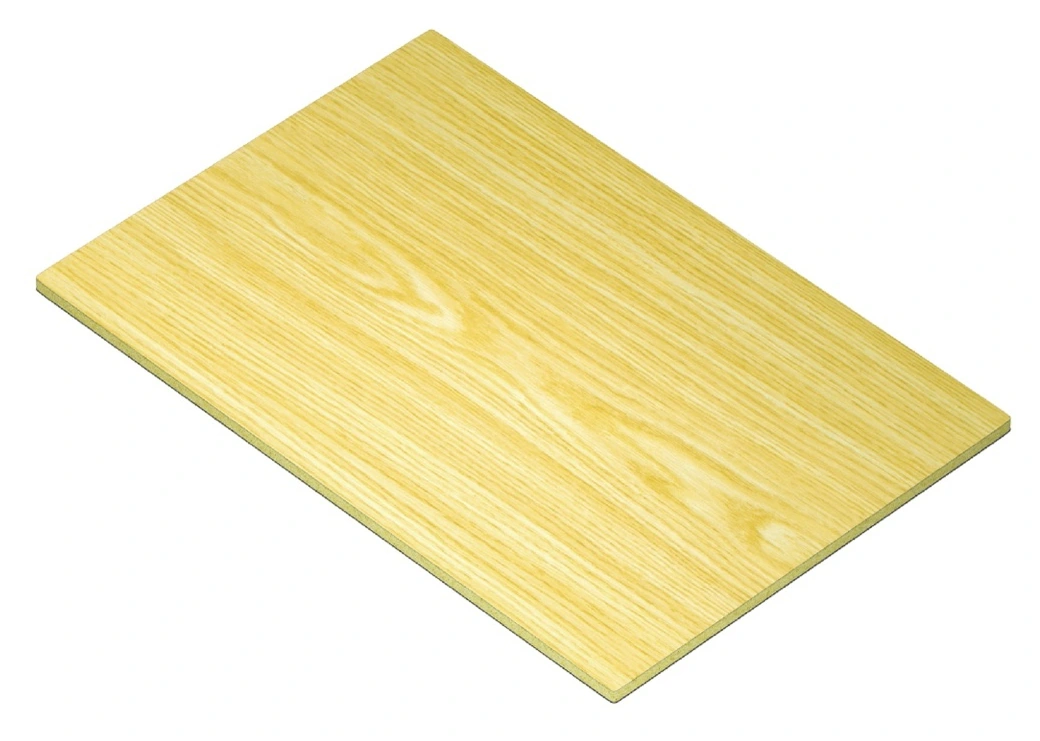 01
01Beautiful. Easy to care for.
Based on mineral decorative boards, a cleanable finish meets a PCM core. Designed around appearance, everyday maintenance and thermal buffering.
Homes, hotels, offices and interiors with cleanable surface requirements.
Silicate-based cleanable decorative panels use a mixed-mineral, non-fired crystallisation process to combine cleanability, static control, fire-oriented design and aesthetics. The base material is designed for impact, abrasion, scratch and chemical resistance, easy cleaning, moisture resistance and protection against insect damage, for interior walls and underground spaces.
Edge Comfort adds a PCM core to this complete decorative panel system, considering surface design, maintenance and indoor thermal buffering together. The priority reference is a 6 mm factory-prefinished wallboard.
Core aggregates include diatomaceous earth, wollastonite, reinforcing fibres (wood-pulp paper and bamboo fibres), aluminium oxide, conductive mica and expanded perlite. A magnesium oxysulfate mineral binder and functional modifiers complete the formulation. This binder follows a carbon-absorbing cement technology route; the finished product’s carbon footprint requires calculation for its actual formulation and production boundaries.
Automated batching, mixing, high-speed stirring, slurry spreading, mesh placement, multiple pressing stages, forming, curing and sanding produce the panel. High-pressure laminate (HPL) is the usual finish; natural veneer and metal finishes are also options.
Organic PCM microcapsules are dispersed through the core as powder. Processing must control uniform distribution, capsule integrity and compatibility with the mineral binder.
Make every wall part of your comfort. Microencapsulated PCM absorbs heat as temperatures rise and releases it as they fall, helping soften room-temperature swings and warming after cooling stops. An easy-clean, factory-finished surface and thermal core arrive together, bringing a calmer temperature experience to homes, hotels and workplaces.
Base-material properties
Scroll sideways to see all columns
| Property | Value | Test method |
|---|---|---|
| Density (kg/m³) | 1050-1350 | GB/T 17657 |
| Thickness swelling in water (%) | ≤ 0.5 | GB/T 17657 |
| Water absorption (%) | ≤ 10.0 | GB/T 17657 |
| Flexural strength (MPa) | ≥ 15 | GB/T 17657 |
| Surface bond strength (MPa) | ≥ 0.40 | GB/T 17657 |
| Surface thermal cycling | No surface change | GB/T 17657 |
| Surface scratch resistance | No continuous circular scratch | GB/T 17657 |
| Surface stain resistance | Grade 5; no corrosion or staining | GB/T 17657 |
| Cigarette burn resistance | No black marks, cracks or blisters | GB/T 17657 |
| Volume resistance (Ω) | 1.0 × 10⁴ - 1.0 × 10⁸ | GB/T 17657 |
| Surface water resistance (30 d) | No cracking, delamination or peeling; slight swelling and discoloration permitted | GB 28376 |
| Surface acid resistance (15 d) | No cracking, delamination or peeling; slight swelling and discoloration permitted | GB 28376 |
| Surface alkali resistance (15 d) | No cracking, delamination or peeling; slight swelling and discoloration permitted | GB 28376 |
| Light fastness (grey-scale grade) | ≥ 4 | GB/T 15102 |
| Antibacterial rate: S. aureus | ≥ 99% | HG/T 3950 |
| Antibacterial rate: E. coli | ≥ 99% | HG/T 3950 |
| Antibacterial durability: S. aureus | ≥ 99% | HG/T 3950 |
| Antibacterial durability: E. coli | ≥ 99% | HG/T 3950 |
| TVOC emission rate (72 h), mg/(m²·h) | ≤ 0.50 | HJ 571 |
| Formaldehyde emission (mg/m³) | E1 ≤ 0.124 | GB 18580 |
| Reaction to fire | A (A2) | GB/T 5464 |
| Radionuclide limits | Class A decorative material | GB 6566 |
T23 / T26 options denote candidate phase-change centres. Powder latent heat: 120 kJ/kg. Loading and latent heat per area are selected for each family’s thickness, density, acoustic or load-bearing requirements. Only the featured 6 mm wallboard reference uses 2.10 kg/m² net powder and a finished-board target of 200 kJ/m²; these are not universal range specifications.
Ambient-temperature, non-fired processing reduces firing energy. Material selection targets low emissions, no asbestos and control of heavy metals. Base-material E1 formaldehyde, TVOC and radionuclide limits appear in the table; high-temperature smoke behaviour is tested separately on the finished product.
Base-material design references Class A, a high-temperature characteristic of 1200 °C and compatible wall assemblies with fire resistance up to 4 h. Temperature resistance and wall fire-resistance time are distinct measures.
A broad choice of finishes, textures and colours supports wood, stone and metal expressions, giving designers scope for individual interiors.
A dense surface supports removal of deposited fumes, acids, alkalis, iodine and blood stains by suitable wiping. Antibacterial performance and durability are evaluated for the organisms and conditions listed in the table.
Carbon-containing cementitious crystals and a hard surface support impact resistance, scratch resistance and service life. Reference characteristics for a 5 mm base board are flexural strength > 30 MPa and surface hardness > 5H; these are not transferable across thicknesses or finishes.
Hydrophobic modification supports wet-strength retention and resistance to corrosion, mould, peeling and deformation. Joint and sealing details are selected for the room’s moisture conditions.
Prefinished components reduce on-site finishing and installation waste. Easy maintenance balances installation cost, service life and long-term upkeep.
Mixed-mineral non-fired crystallisation and automated composite forming support surface quality, dimensional consistency and scalable production.
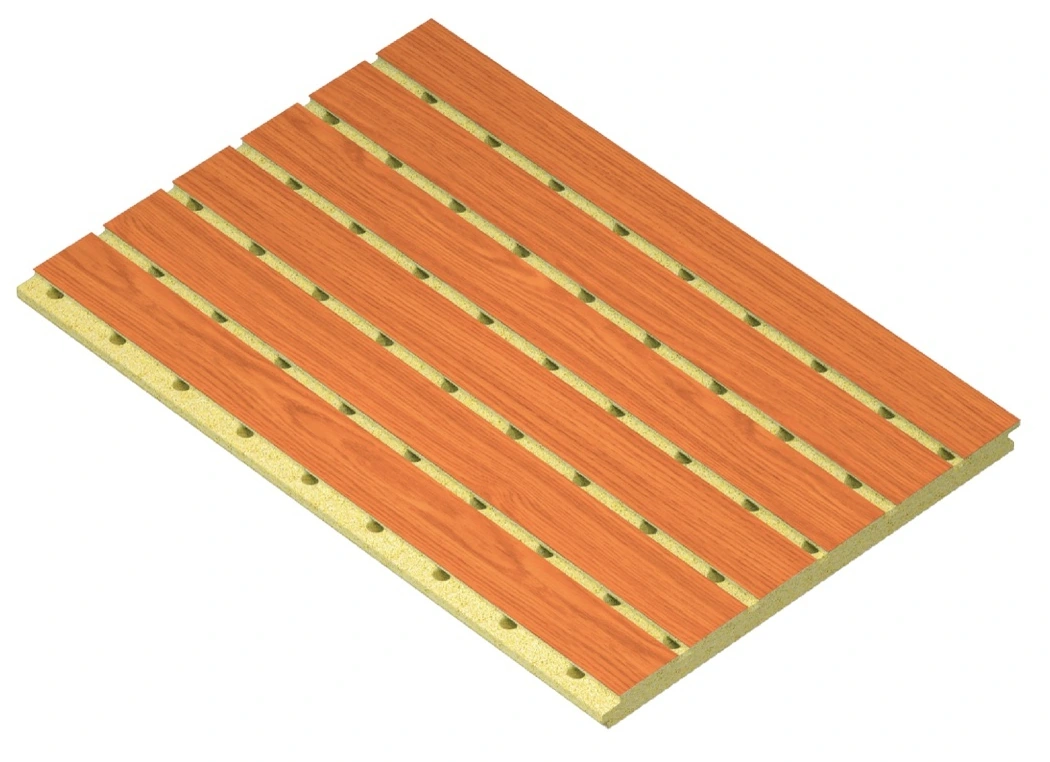 02
02Steadier temperatures. Softer sound.
Based on grooved or perforated mineral acoustic boards, combining PCM buffering with a coordinated face, acoustic backing and cavity.
Meeting rooms, classrooms, media rooms and public interiors.
Silicate-based acoustic decorative panels combine a finish, mineral core and fire-oriented acoustic fabric in a three-layer construction. Fire design, acoustics and aesthetics are considered together. The core uses mixed-mineral non-fired crystallisation, with slots or holes chosen for the space and its acoustic requirements.
Functional design: static control, fire-oriented design and decoration broaden the role of a traditional sound-absorbing material.
Structural design: rare-earth microbubble material and reinforcing mesh create a multi-layer core with a honeycomb-like microporous structure and mechanical strength. Slots and drilled holes form a perforated resonant system, particularly useful for mid- and high-frequency absorption.
Process design: formulation and forming adjustments create a microporous crystalline matrix that supports absorption and machinability alongside base-material fire performance. Edge Comfort adds PCM thermal buffering to this acoustic construction.
Face: normally slotted or perforated HPL, selected for the acoustic design.
Core: the silicate range’s mineral aggregates, reinforcing fibres and inorganic binder, with microbubble material, pore structure and mesh adjusted for acoustics.
Backing: fire-oriented acoustic fabric works with the panel and installation cavity. Porous and resonant mechanisms dissipate sound energy and reduce reflection.
PCM microcapsule powder is incorporated without obstructing effective openings or acoustic pores. Dosage is optimised jointly with density, strength and absorption.
Room for focus. Room for comfort. Slots and acoustic backing help soften the indoor sound environment, while the phase-change core buffers heat changes from occupants and equipment. Meetings, lessons and film sessions benefit from a space designed for fewer temperature swings and a calmer atmosphere.
Base-material properties
Scroll sideways to see all columns
| Property | Value | Test method |
|---|---|---|
| Smoke toxicity | Not below ZA1 | GB/T 20285 |
| Fire growth rate FIGRA 0.4 MJ (W/s) | ≤ 250 | GB/T 20284 |
| Total heat release THR 600 s (MJ) | ≤ 15 | GB/T 20284 |
| Lateral flame spread LFS | Does not reach specimen edge | GB/T 20284 |
| Flame-tip height Fs (mm) | ≤ 150 | GB/T 8626 |
| Internal exposure index | ≤ 1.0 | GB 6566 |
| External exposure index | ≤ 1.0 | GB 6566 |
| Formaldehyde emission (mg/m³) | E1 ≤ 0.124 | GB 18580 |
| TVOC emission rate (72 h), mg/(m²·h) | ≤ 0.50 | HJ 571 |
| NRC: Class I | NRC ≥ 0.80 | GB/T 20247 |
| NRC: Class II | 0.80 > NRC ≥ 0.60 | GB/T 20247 |
| NRC: Class III | 0.60 > NRC ≥ 0.40 | GB/T 20247 |
| NRC: Class IV | 0.40 > NRC ≥ 0.20 | GB/T 20247 |
T23 / T26 options denote candidate phase-change centres. Powder latent heat: 120 kJ/kg. Loading and latent heat per area are selected for each family’s thickness, density, acoustic or load-bearing requirements. Only the featured 6 mm wallboard reference uses 2.10 kg/m² net powder and a finished-board target of 200 kJ/m²; these are not universal range specifications.
Slots, perforations, acoustic backing and cavity work together to reduce echoes and reverberation. Class I construction uses NRC ≥ 0.80 as a selection range. Performance depends on open area, cavity depth, backing and installation.
Ambient-temperature non-fired mineral processing and low-emission selection control formaldehyde, TVOC, radionuclides and harmful constituents. The table lists base-material limits.
Base-material references include Class A, a 1200 °C high-temperature characteristic and compatible wall assemblies rated up to 4 h. Smoke toxicity, heat release and flame spread are listed separately because they measure different behaviour.
Colours and textures can be coordinated with slot shapes, hole patterns and panel layouts to balance interior atmosphere and acoustic design.
Mineral bonding and reinforcement support impact resistance, scratch resistance and service life, while maintaining slot edges and face-to-core bonding.
The base-material volume-resistance characteristic is 1 × 10⁶ - 1 × 10⁸ Ω. Static-control design can reduce charge accumulation and dust adhesion, supporting routine cleaning.
Hydrophobic modification supports stability when damp and resistance to corrosion, mould, peeling and distortion. Acoustic backing and cavities also need suitable moisture conditions.
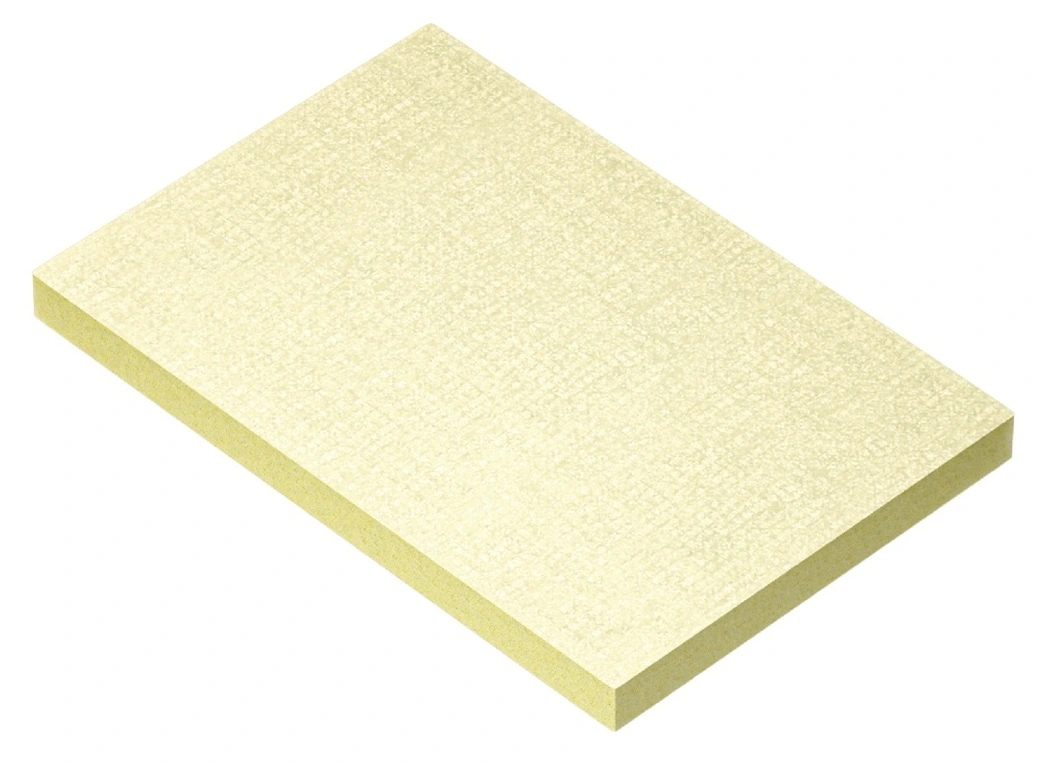 03
03Divide space. Buffer heat.
Based on mineral partition boards, PCM cores integrate into lightweight partition systems. Space division, surface treatment and thermal inertia are planned together.
Residential partitions, office divisions and hotel internal walls.
Silicate-based partition boards serve interior partitions, ceilings and fire-oriented linings. Mineral-bonded boards work with lightweight supports to combine spatial separation, fire design, sound insulation, moisture resistance and durability.
Separated double-leaf walls use air cavities and different facing configurations to improve sound and thermal insulation. Micropores can also absorb and release moisture as humidity changes, providing passive humidity buffering.
Edge Comfort introduces a PCM core or functional layer into this partition system, integrating spatial layout, surface finish and thermal inertia.
The base material uses a mineral binder capable of forming carbon-containing cementitious crystals, with hydrophobic modification and a microporous structure. Mineral ratios, reinforcement and board thickness are confirmed with the final specification.
The complete wall includes boards, studs, connectors, joints and perimeter details. Single-layer, double-layer and separated constructions are selected individually.
Organic PCM microcapsule powder is dispersed in the core or a validated room-side functional layer. Fixings, joints and fire-stopping must remain effective as a complete system.
Divide the room. Extend the comfort. Partitions become heat-absorbing and heat-releasing surfaces, adding thermal inertia to lightweight interiors. Bedrooms, offices and hotel rooms can use temperature grades suited to their schedules, helping moderate daytime heat build-up and temperature changes during intermittent air-conditioning.
Base-material properties
Scroll sideways to see all columns
| Property | Value | Test method |
|---|---|---|
| Formaldehyde emission (mg/m³) | E1 | - |
| Reaction to fire | A | - |
| Base-material high-temperature characteristic (°C) | 1200 | - |
| Wall-system fire resistance | Up to 4 h, assembly dependent | - |
| Rw, two 12 mm layers on each face (dB) | 60 | - |
| Rw, one 12 mm layer on each face (dB) | 54 | - |
T23 / T26 options denote candidate phase-change centres. Powder latent heat: 120 kJ/kg. Loading and latent heat per area are selected for each family’s thickness, density, acoustic or load-bearing requirements. Only the featured 6 mm wallboard reference uses 2.10 kg/m² net powder and a finished-board target of 200 kJ/m²; these are not universal range specifications.
Ambient-temperature production and low-emission materials address energy use and indoor conditions. Formaldehyde, heavy metals and radionuclides are controlled. E1 is a base-material selection class.
Base-material references are Class A and a 1200 °C high-temperature characteristic. Wall-system fire resistance of up to 4 h depends on studs, layer count, thickness, connections and fire-stopping.
Carbon-containing cementitious crystals create a stable board for impact resistance, scratch resistance and long service. Edges, screw zones and joints are designed together.
Hydrophobic modification supports stability when damp and resistance to corrosion, mould, peeling and deformation.
Reference Rw is 60 dB for two 12 mm layers on each wall face, and 54 dB for one 12 mm layer per face. The latter is a reference level comparable to a roughly 24 cm brick wall. These are whole-wall values, not single-board or 6 mm reference-product ratings.
Micropores absorb or release moisture as conditions change. Humidity response and PCM heat storage are separate mechanisms.
Lightweight partitions and dry construction reduce on-site waste while balancing installation efficiency, cleaning, maintenance and long-term cost.
The base board can serve partitions, ceilings, fire-oriented linings, container floors and construction underlays, with thickness, loading and system design adapted to each use.
 04
04Comfort starts underfoot.
Based on mineral flooring or tiles, PCM is incorporated into a suitable core layer. Wear surfaces can be paired with wood- or stone-look finishes.
Residential, hotel and office floors, selected for loads and use.
Silicate flooring and tiles combine an inorganic core with a decorative wear layer, bringing together fire-oriented design, mechanical strength, acoustics, aesthetics and environmental requirements. The mineral base follows an asbestos-free, low-emission route, with moisture, mould, insect, corrosion, wear and ageing resistance as design features.
A dense core supports floor stability and acoustic design. Insulating or static-control finishes can be selected for the application. Edge Comfort adds PCM thermal buffering so the floor participates in indoor heat storage while fulfilling its decorative and functional role.
Aggregates include diatomaceous earth, wollastonite, reinforcing fibres (wood-pulp paper and bamboo fibres), aluminium oxide, conductive mica and expanded perlite. A magnesium oxysulfate mineral binder and functional modifiers complete the core. Carbon benefits of the carbon-absorbing binder route require finished-product lifecycle accounting.
Automated mixing, high-speed stirring, slurry spreading, mesh placement, multiple pressing stages, forming, curing and sanding produce the panel. The usual face is wear-resistant HPL.
PCM microcapsule powder is incorporated into the functional core. Loading, wear resistance, dimensional stability, surface temperature and thermal resistance determine the dosage and construction together.
Let temperature changes slow down, from the floor up. The phase-change layer uses floor area to store and release heat, buffering fluctuations from sunlight and indoor heat sources. Combined with a wear-resistant finish and a compatible underfloor-heating system, it supports more even thermal conditions in living, working and hotel spaces.
Base-material properties
Scroll sideways to see all columns
| Property | Value | Test method |
|---|---|---|
| Density (kg/m³) | 1050-1250 | GB/T 17657 |
| Moisture content (%) | ≤ 10 | GB/T 17657 |
| Thickness swelling in water (%) | ≤ 10 | GB/T 17657 |
| Modulus of rupture (MPa) | ≥ 10 | GB/T 17657 |
| Modulus of elasticity (MPa) | ≥ 1100 | GB/T 17657 |
| Surface bond strength (MPa) | ≥ 1 | GB/T 17657 |
| Surface thermal cycling | No surface change | GB/T 17657 |
| Surface scratch resistance | No visible change | GB/T 17657 |
| Surface stain resistance | Grade 5; no corrosion or staining | GB/T 17657 |
| Abrasion resistance (revolutions) | ≥ 6000 | GB/T 17657 |
| Cigarette burn resistance | No black marks, cracks or blisters | GB/T 17657 |
| Dimensional stability (mm) | ≤ 0.60 | GB/T 18102 |
| Impact resistance | ≤ 0.9 | GB/T 18102 |
| Light fastness (grey-scale grade) | ≥ 4 | GB/T 15102 |
| Formaldehyde emission (mg/m³) | E1 ≤ 0.124 | GB 18580 |
| TVOC emission rate (72 h), mg/(m²·h) | ≤ 0.50 | HJ 571 |
| Radionuclide limits | Class A decorative material | GB 6566 |
| Reaction to fire | A (A2) | GB/T 5464 |
T23 / T26 options denote candidate phase-change centres. Powder latent heat: 120 kJ/kg. Loading and latent heat per area are selected for each family’s thickness, density, acoustic or load-bearing requirements. Only the featured 6 mm wallboard reference uses 2.10 kg/m² net powder and a finished-board target of 200 kJ/m²; these are not universal range specifications.
Non-fired ambient-temperature production reduces firing energy. Material selection targets no asbestos, low formaldehyde and TVOC emissions, and control of heavy metals and radionuclides. See the base-material table.
Base-material references include Class A and a 1200 °C high-temperature characteristic. Up to 4 h fire resistance relates to compatible assemblies.
Finishes, textures and colours offer wood and stone effects coordinated with the interior design.
A dense, low-porosity surface supports stain and penetration resistance. Suitable cleaners or a damp cloth simplify routine care.
The hard face and bonded core share daily service loads. The abrasion selection value is ≥ 6000 revolutions, alongside impact resistance and long-term durability.
Hydrophobic modification supports wet strength and dimensional stability, reducing corrosion, mould, peeling and distortion while controlling thermal movement.
Board or tile delivery reduces installation waste and balances laying speed, maintenance effort and total service-life costs.
Mineral bonding, reinforcement mesh and automated composite processing support consistency and workability, matching the wear layer to the core.
 05
05Individual style. Comfort within.
Based on custom bamboo-mineral decorative boards, combining wood or stone looks and sized fabrication with PCM temperature buffering.
Feature walls and bespoke hotel or commercial interiors.
Custom bamboo-mineral decorative panels follow a carbon-absorbing ceramic binder technology route. Curing creates numerous micropores and a molecular-sieve-like structure, supporting adsorption and humidity regulation. An 8D digital decorative finish allows custom imagery while preserving the base material’s functional design.
Air-quality design includes physical adsorption, ion exchange and photocatalysis. Actual formaldehyde or benzene removal and negative-ion behaviour require testing under defined conditions; the panel is not presented as a radon-remediation or therapeutic product.
Edge Comfort adds PCM microcapsules so custom finishes, humidity response and phase-change thermal buffering can be designed within one panel system.
Core aggregates include diatomaceous earth, wollastonite, microcrystalline kaolinite, reinforcing fibres (wood-pulp paper and bamboo fibres), aluminium oxide, photocatalyst, conductive mica and expanded perlite, with a magnesium oxysulfate inorganic binder and functional modifiers.
Automated mixing, high-speed stirring, slurry spreading, mesh placement, multiple pressing, forming, curing and sanding produce the board. 8D digital decoration offers realistic textures and custom artwork.
Organic PCM microcapsules are dispersed through the functional core. Formulation balances binder crystallisation, pore structure, face bonding and capsule integrity.
The texture you love, with comfort built in. Wood, stone and custom patterns give an interior its character; microencapsulated PCM buffers heat changes within the core. Decoration and temperature buffering come together for feature walls, hotel lobbies and commercial interiors.
Base-material properties
Scroll sideways to see all columns
| Property | Value | Test method |
|---|---|---|
| Density (kg/m³) | To be confirmed | GB 25970-2010 |
| Hygroscopic deformation (%) | ≤ 0.2 | GB 25970-2010 |
| Flexural strength (MPa) | ≥ 10 | GB 25970-2010 |
| Antibacterial rate: S. aureus | ≥ 99% | HG/T 3950-2007 |
| Antibacterial rate: E. coli | ≥ 99% | HG/T 3950-2007 |
| Antibacterial durability: S. aureus | ≥ 99% | HG/T 3950-2007 |
| Antibacterial durability: E. coli | ≥ 99% | HG/T 3950-2007 |
| TVOC emission rate | ≤ 0.50; unit and test conditions to be confirmed | HJ 571 |
| Formaldehyde emission (mg/m³) | E1 ≤ 0.124 | GB 18580-2017 |
| Reaction to fire | A (A1) | GB/T 5464-2010 |
| Radionuclide limits | Class A decorative material | GB 6566-2010 |
T23 / T26 options denote candidate phase-change centres. Powder latent heat: 120 kJ/kg. Loading and latent heat per area are selected for each family’s thickness, density, acoustic or load-bearing requirements. Only the featured 6 mm wallboard reference uses 2.10 kg/m² net powder and a finished-board target of 200 kJ/m²; these are not universal range specifications.
Micropores and a molecular-sieve-like structure provide a basis for adsorption, ion exchange and photocatalytic functions.
Base-material reaction to fire is A (A1). A 1200 °C high-temperature characteristic and up to 4 h fire resistance refer to material and compatible-system evaluations respectively. PCM modification requires reclassification.
8D digital finishes support custom textures, colours and imagery, from natural-material effects to artistic interior expression.
Crystalline bonding supports impact and scratch resistance. A 5 mm base board has a reference flexural characteristic ≥ 18 MPa; the table’s ≥ 10 MPa is a separate selection value. Both depend on the final specification.
Micropores and molecular-sieve-like structures support vapour transport and moisture sorption and release, buffering humidity changes when face and core retain suitable vapour exchange.
The binder can absorb CO₂ during mineralisation and carbonation. A net-negative-carbon claim or offset quantity requires lifecycle accounting covering raw materials, production, transport and service life.
Hydrophobic modification supports wet stability and resistance to corrosion, mould, peeling and distortion. Details and cleaning methods suit the room’s humidity.
Custom finishes and functional cores are delivered together, reducing secondary finishing work while balancing installation, maintenance, service life and design freedom.
 06
06Insulation, with thermal buffering.
Based on mineral insulation boards, with project-specific PCM integration. Insulation slows heat flow; phase change stores heat temporarily. Both functions are designed together.
Internal wall insulation and composite envelopes; roofs and floors subject to system selection.
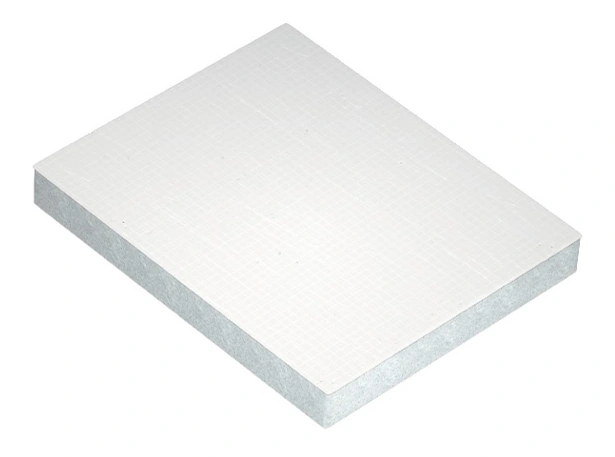
Mineral insulation boards combine energy efficiency, fire-oriented safety and cost-effective construction. Silicate mesh-mould composite forming brings insulation, fire and water-resistance design into one board, with three reinforcing mesh layers improving strength and physical properties.
Base-material selection values include Class A reaction to fire, thermal conductivity ≤ 0.05 W/(m·K) and compressive strength ≥ 0.30 MPa. This balances insulation and safety, with high strength, low water absorption, a coordinated construction and low installation waste for residential, public and industrial envelope projects.
Edge Comfort introduces PCM particles or a functional layer so reduced heat transmission and heat buffering can be designed together.
Lightweight aggregates include modified expanded polystyrene and aerogel particles. Cement and other mineral binders are combined with water repellents, foaming agents and functional modifiers.
Automated proportioning, mixing, high-speed stirring, mould preparation, slurry spreading, three mesh-placement stages, multiple pressing, forming, curing and edge trimming create the reinforced composite board.
PCM microcapsule powder can be placed in a thermally coupled functional layer. Direct addition to the lightweight insulation core requires joint checks of conductivity, density, strength and usable heat storage.
Slow heat transfer. Buffer the heat that arrives. Insulation reduces heat flow through the building envelope, while the phase-change layer absorbs, stores and releases heat within its operating range. Together they help moderate indoor temperature swings caused by sunlight and day-to-night changes, adding thermal inertia to the envelope.
Base-material properties
Scroll sideways to see all columns
| Property | Value | Test method |
|---|---|---|
| Apparent density (kg/m³) | 130-170 | GB/T 5486 |
| Compressive strength (MPa) | ≥ 0.30 | GB/T 5486 |
| Flexural strength (MPa) | ≥ 0.25 | GB/T 5486 |
| Thermal conductivity (25 °C), W/(m·K) | ≤ 0.05 | GB/T 10294 |
| Water absorption by volume (%) | ≤ 8.0 | GB/T 5486 |
| Tensile strength perpendicular to face (MPa) | ≥ 0.12 | GB/T 29906 |
| Drying shrinkage (%) | ≤ 0.35 | GB/T 169 |
| Softening coefficient | ≥ 0.60 | GB/T 20473 |
| Reaction to fire | A | GB 8624 |
T23 / T26 options denote candidate phase-change centres. Powder latent heat: 120 kJ/kg. Loading and latent heat per area are selected for each family’s thickness, density, acoustic or load-bearing requirements. Only the featured 6 mm wallboard reference uses 2.10 kg/m² net powder and a finished-board target of 200 kJ/m²; these are not universal range specifications.
Silicate mesh-mould technology and three reinforcing meshes support a stable composite construction. Proportioning, mesh placement, pressing and curing jointly control quality.
Low conductivity reduces envelope heat transfer; the base-material selection value is ≤ 0.05 W/(m·K). Insulation and PCM storage are different functions and should be calculated separately before integration.
The base material has Class A reaction to fire. Insulation and fire requirements are selected together.
The material description includes absorption below 6%, while the technical table specifies water absorption by volume ≤ 8.0%. Different conditions must not be merged into one acceptance limit. Low absorption supports insulation performance and stability.
Ambient-temperature production reduces firing energy. Raw materials are selected for low emissions and control of formaldehyde, heavy metals and radionuclides. Fire smoke and finished-product emissions need independent testing.
Front and rear reinforcement meshes improve installation robustness and reduce cutting and fitting waste, balancing material, installation and operating costs.
Automated forming supports continuous production and project deliveries. Actual capacity and delivery schedules depend on orders, specifications and production planning.
Interior and exterior walls, roofs, floors and large-building upgrades use location-specific waterproofing, fixing, drainage and fire details.
Construction guides, calculations, detail drawings and technical services can be combined into project-specific selection and a complete insulation system.
Boards can be cut to size on site. Clear layouts and fixing details support faster fitting, less waste and shorter construction periods.
Thickness, density, PCM loading, temperature range, latent heat and fixing are specified separately. Fire, acoustic, antimicrobial, emissions and carbon claims require valid assessment of the PCM end product or complete system.
PCM COMPOSITE CORE
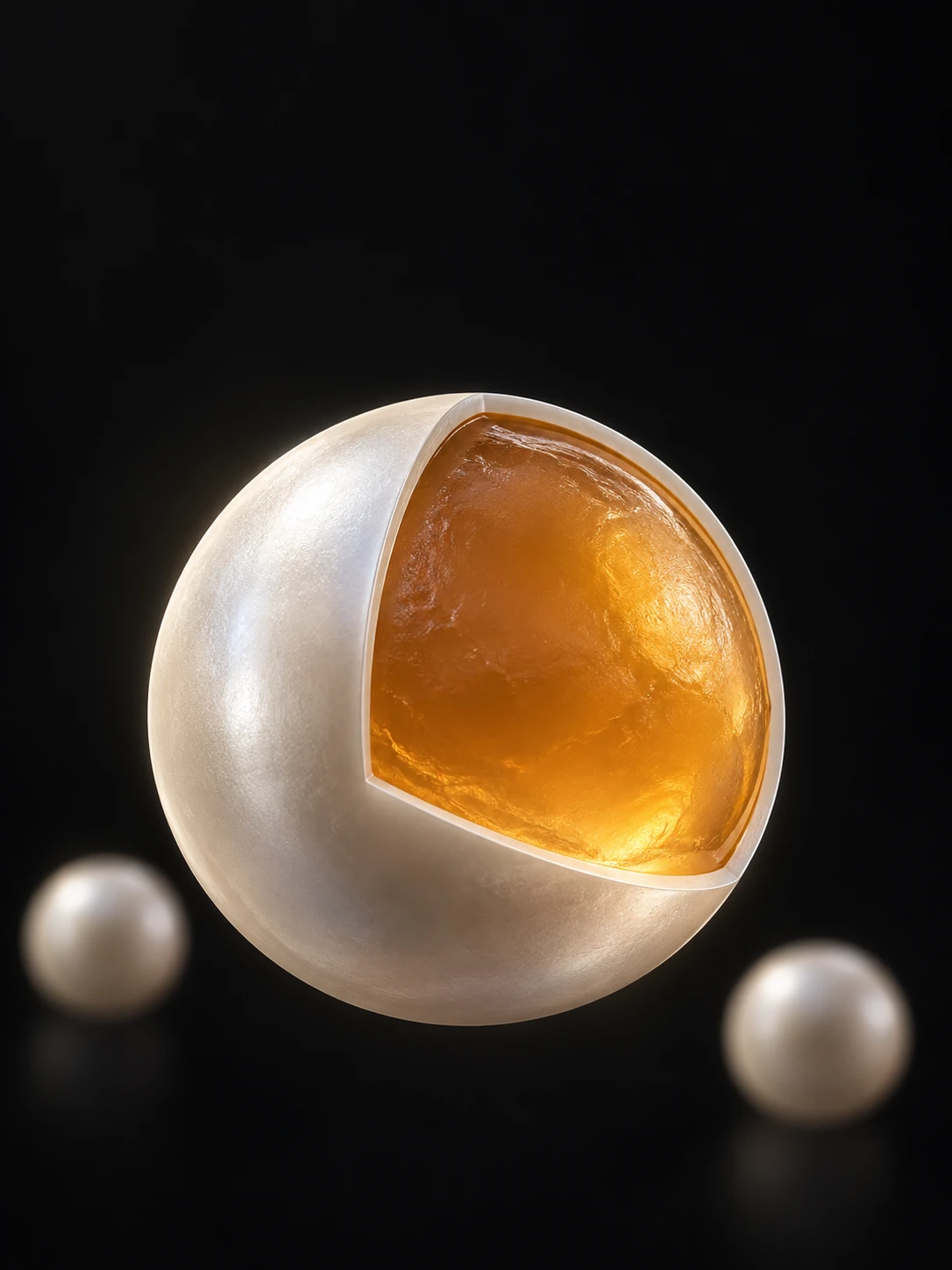
Organic PCM microcapsules are added to the base formulation. The phase-change material stays inside its capsule shell; the powder is dispersed through the composite core to absorb and release heat within its transition range.
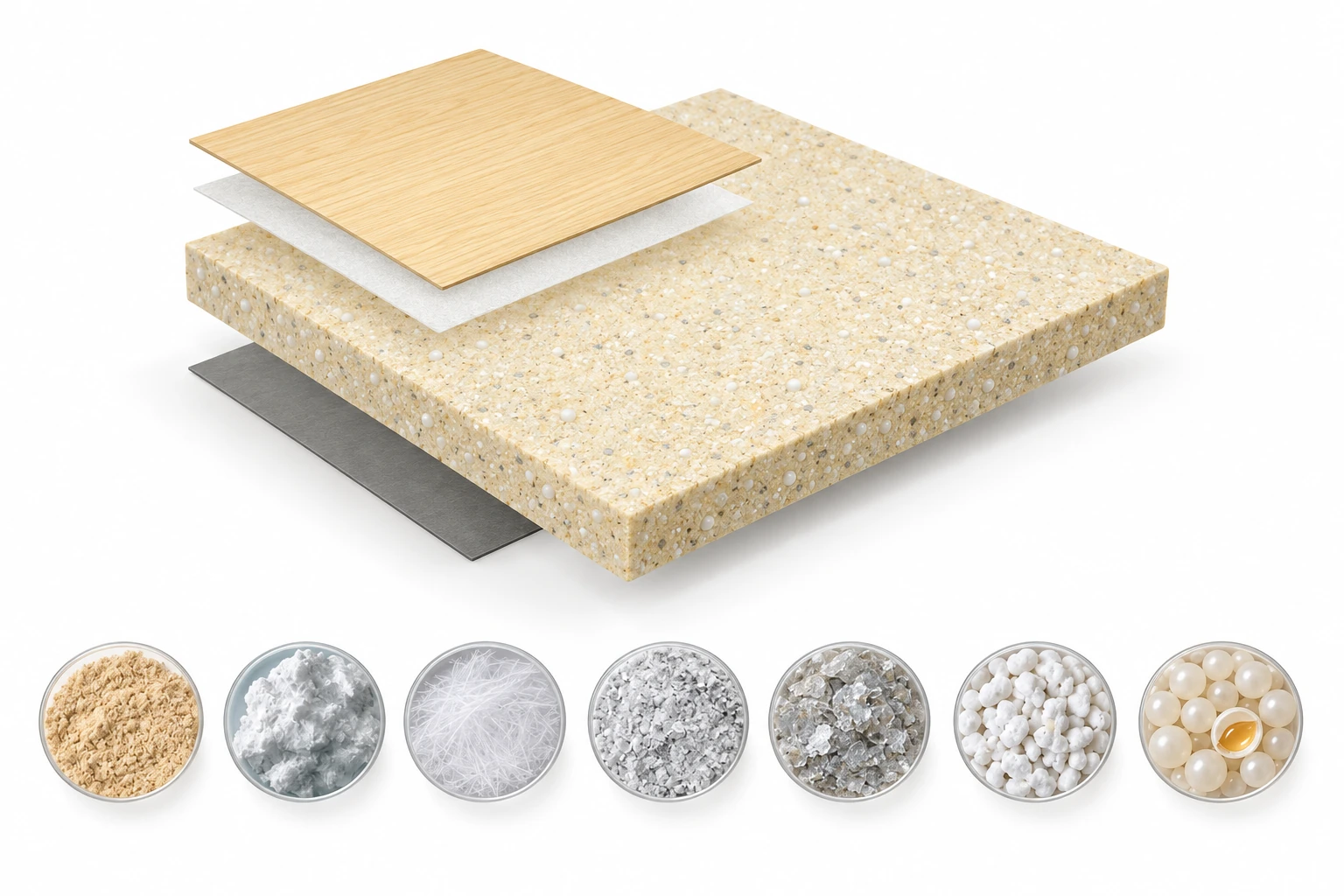
MICROENCAPSULATED PCM
An organic PCM core is enclosed in microcapsules and incorporated into the board as powder. Inside each capsule, it absorbs heat on warming and releases it on cooling.
The comfort cycle
Within its phase-change range, the core temporarily stores part of the heat. A cooler environment removes that heat and restores capacity for the next cycle.
Air conditioning or suitable night ventilation removes heat, allowing the PCM to solidify.
While capacity remains, phase change absorbs part of the heat and helps moderate warming.
When capacity is used, heat must be removed again before the next buffering cycle.
For cooler room targets where night-time or scheduled operation can bring the panel low enough to recover capacity.
Prioritise evaluation with intermittent summer cooling. Check remaining absorption capacity before switching off.
The grade is not a room thermostat setting. Setting the AC to 26°C does not ensure that T23 or T26 has solidified. Confirm temperature range and recovery time using finished-panel melting and freezing curves.
Finish directions
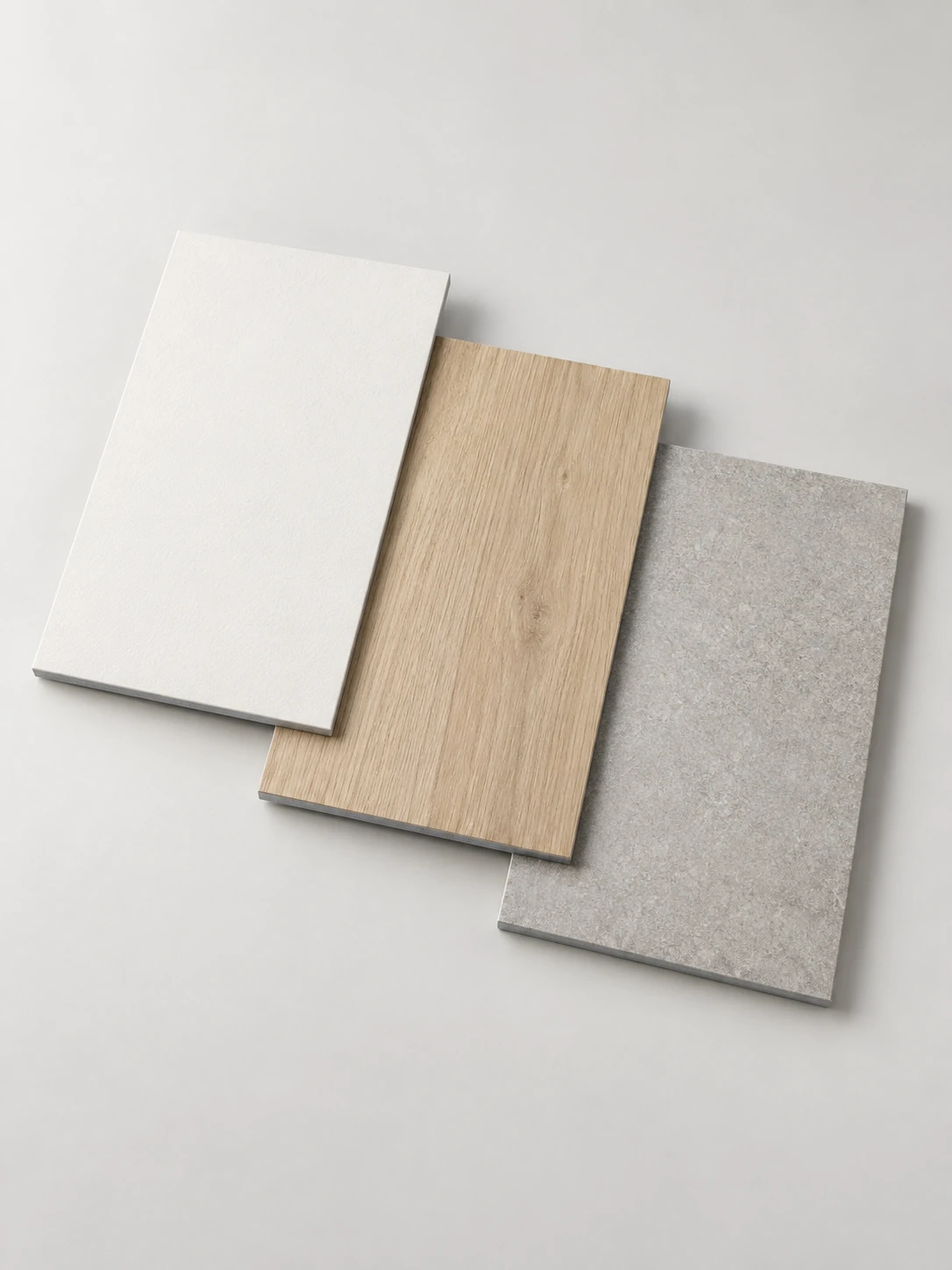
A slim panel brings together the finish and the phase-change function.
Finish concepts. Final colour, texture and surface performance depend on approved samples.
Select the use, substrate and loads first, then coordinate panels, fixings and trims. Follow the qualified product's installation documents and project details.
Use a validated clamping, edge-support or bonding system suited to the substrate, finish and joints.
Preserve the designed open area and cavity; verify acoustic performance after PCM modification.
Design boards, studs, infill and joints as a complete system; detail penetrations to project requirements.
Use the qualified tongue-and-groove, click or matching laying system; check loads, flatness and finish thermal resistance.
Approve finish and size samples, then coordinate supports, corners and interfaces; protect edges and surfaces.
Place PCM to suit climate and construction, balancing conductivity, density, moisture control and recharge conditions.
Installation
Featured wallboard reference
Check level, dryness and load capacity. Plan joints, sockets and access. Prefer factory sizing and pre-cut openings.
Anchor to a sound substrate using approved details. Check edge support, load and alignment while protecting the functional core.
Protect faces and edges; use two people for larger panels. Fit to the approved clamping or ledge detail and check alignment.
Use matching trims and joint details. Clean the surface and record batch numbers, net installed area and access positions.
Do not route rear grooves or fit undercut anchors into the 6 mm panel. Fixing spacing, joints and edge distances require approved system details.
The 6 mm target includes the finish and backing. The installed wall build-up also includes levelling, supports and connections. Panel layers and edge details are subject to sample validation.
Specifications
These figures apply only to the EC-CB6-200 prefinished wallboard reference design, not to all board families.
This is stored heat, not electricity saved or a fixed comfort duration. Actual buffering depends on remaining capacity, heat-transfer rate, room heat load and exposed area. Room testing is required.
| Application | Prefinished interior wallboard; initial focus on walls |
|---|---|
| Finished thickness | 6 mm, including finish and backing |
| Target mass per area | 8.4 kg/m² at an assumed finished density of 1.4 kg/L |
| Latent heat target | 200 kJ/m² / 55.6 Wh(th)/m² |
| Candidate grades | T23: approx. 23°C / T26: approx. 26°C centre |
| Candidate panel size | 600 × 1200 mm / 0.72 m² per panel |
| Mass / latent heat per panel | Approx. 6.05 kg / 144 kJ |
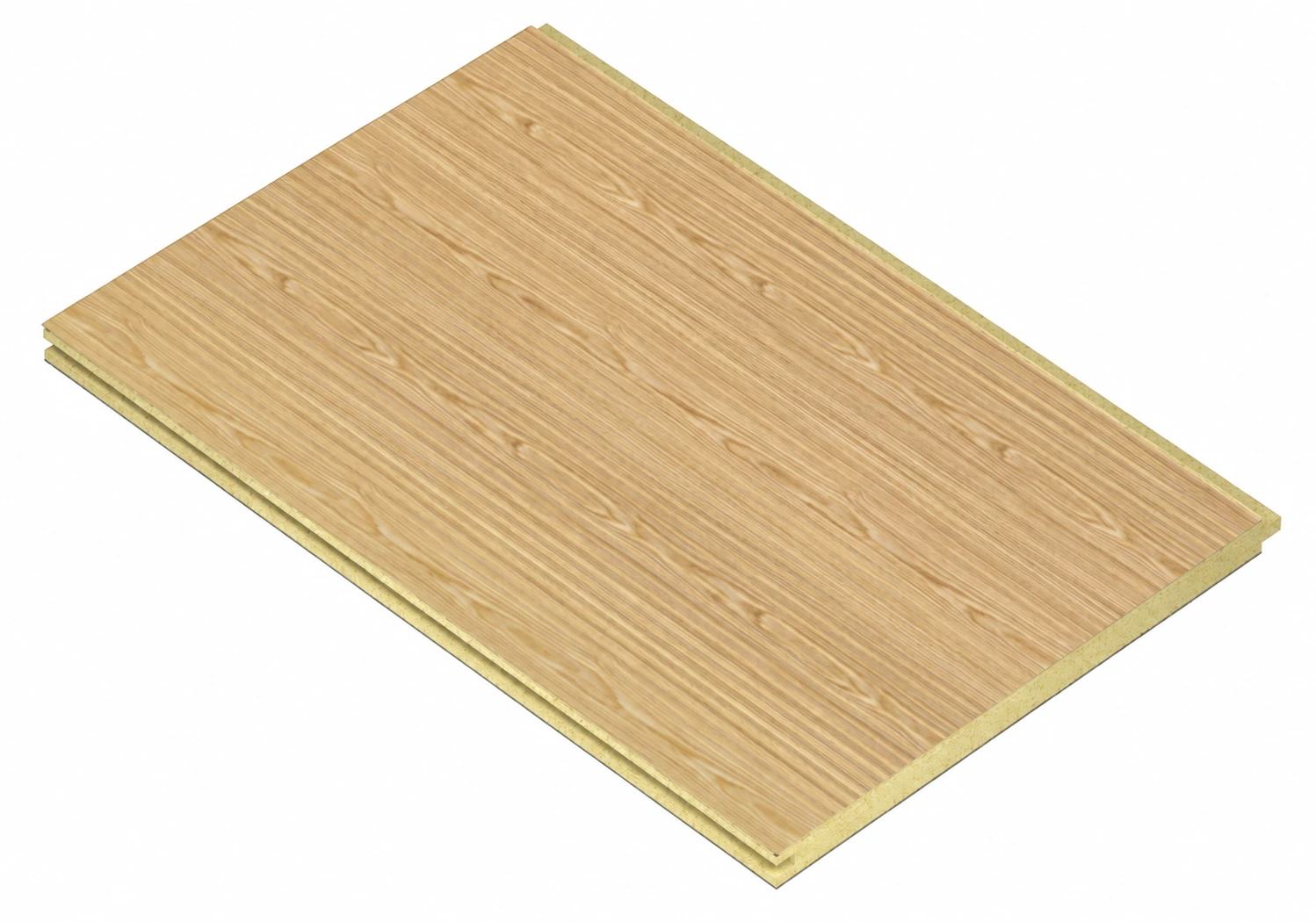
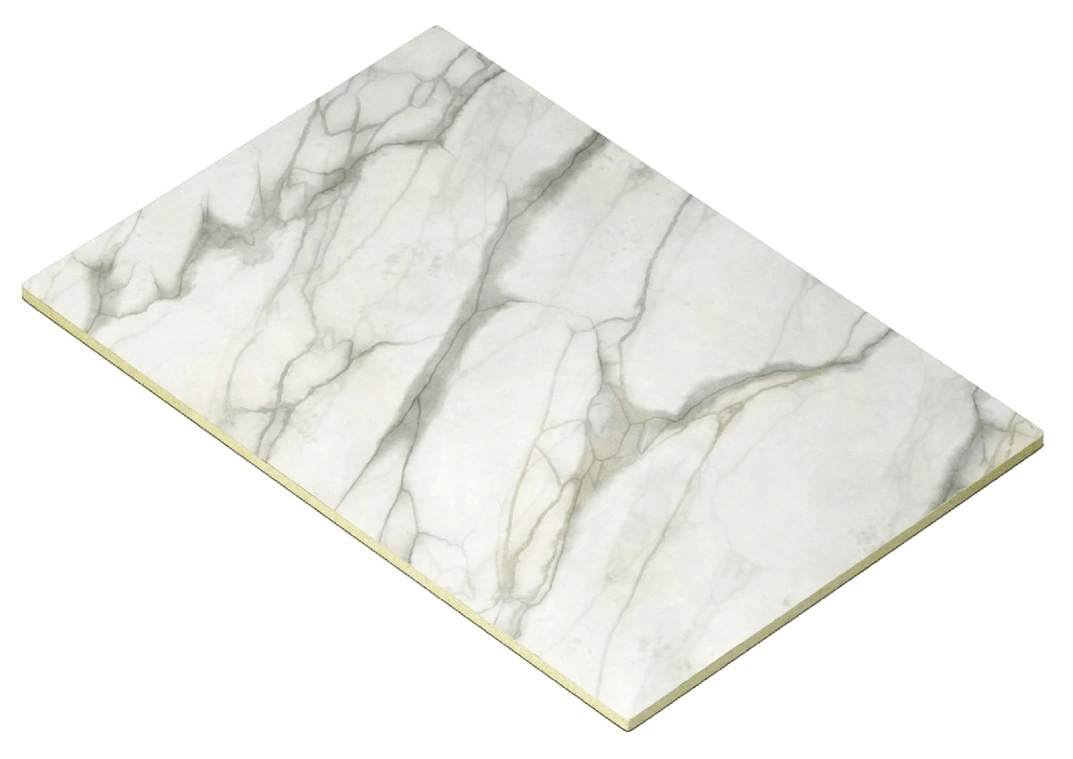
| Proposed finishes | Mineral white, pale oak, soft stone |
| Model | EC-CB6-200-T23 / EC-CB6-200-T26 |
Adapt dimensions, connections and applicable requirements for China, Europe, North America and Japan. Validate finished-panel latent heat, cycling, structure, fire performance and indoor emissions after PCM modification. Base-board certifications do not automatically apply.
Thickness, density, PCM loading, temperature range, latent heat and fixing are specified separately. Fire, acoustic, antimicrobial, emissions and carbon claims require valid assessment of the PCM end product or complete system.
Choose a language and submit your contact details with an email request for the brochure.
From one wall to a complete interior. Design the board family, temperature grade, finish and installation together.
Share the project location, application, area, HVAC schedule and preferred finish.
Values are design targets. Actual comfort duration and net energy savings require finished-product and room testing.