
This is the material foundation of Passive Edge's broader thermal infrastructure platform. Passive Edge Tech develops nano phase-change microcapsules and encapsulated PCM systems with particle sizes down to 200 nm. The platform is designed for nanoscale thermal materials, stable dispersion, thermal-response control, and integration into advanced thermal management systems.
Heat most materials and they simply get warmer. A phase-change material is different: at its melting point it keeps soaking up heat while staying at the same temperature, storing the energy in the change of state.
And it’s reversible. As the surroundings cool, the material refreezes and gives that heat back — holding a target temperature from both sides.
Pick the melting point and you pick the temperature it protects: 2–8 °C for vaccines, room temperature for electronics, sub-zero for frozen goods.

Below the phase point the PCM is solid and fully charged. As its surroundings warm toward the set point, it stands ready to absorb.
At the phase point it melts, taking in heat at constant temperature — flattening a thermal spike instead of letting it pass through.
When surroundings cool, the material refreezes and releases the stored heat — defending the set point from the other side, then resetting for the next cycle.
Phase-change material stores a lot of heat in a small mass — but raw, it leaks on melt, separates over cycles, and conducts heat poorly. Encapsulation is the difference between a chemistry and a usable material.
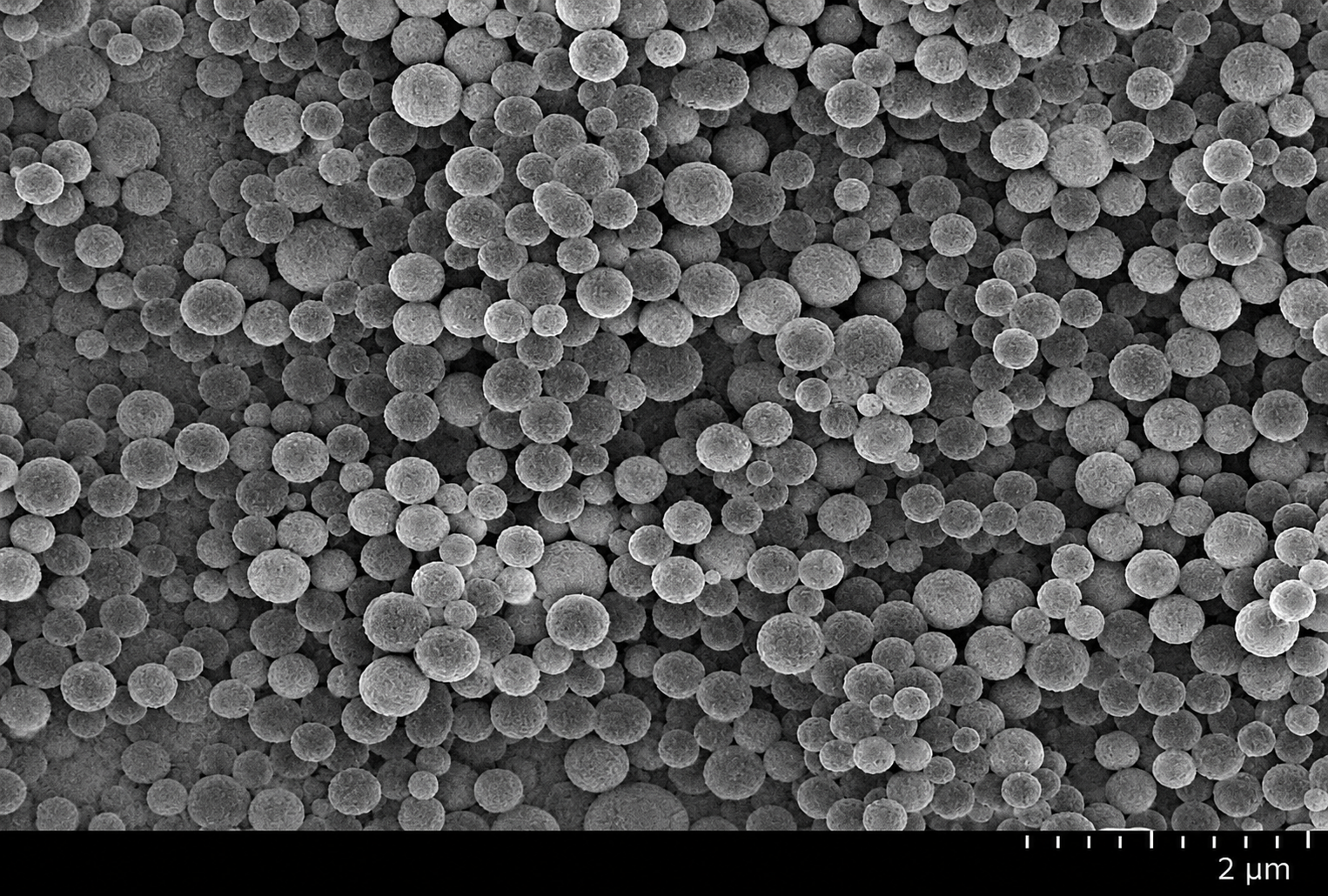
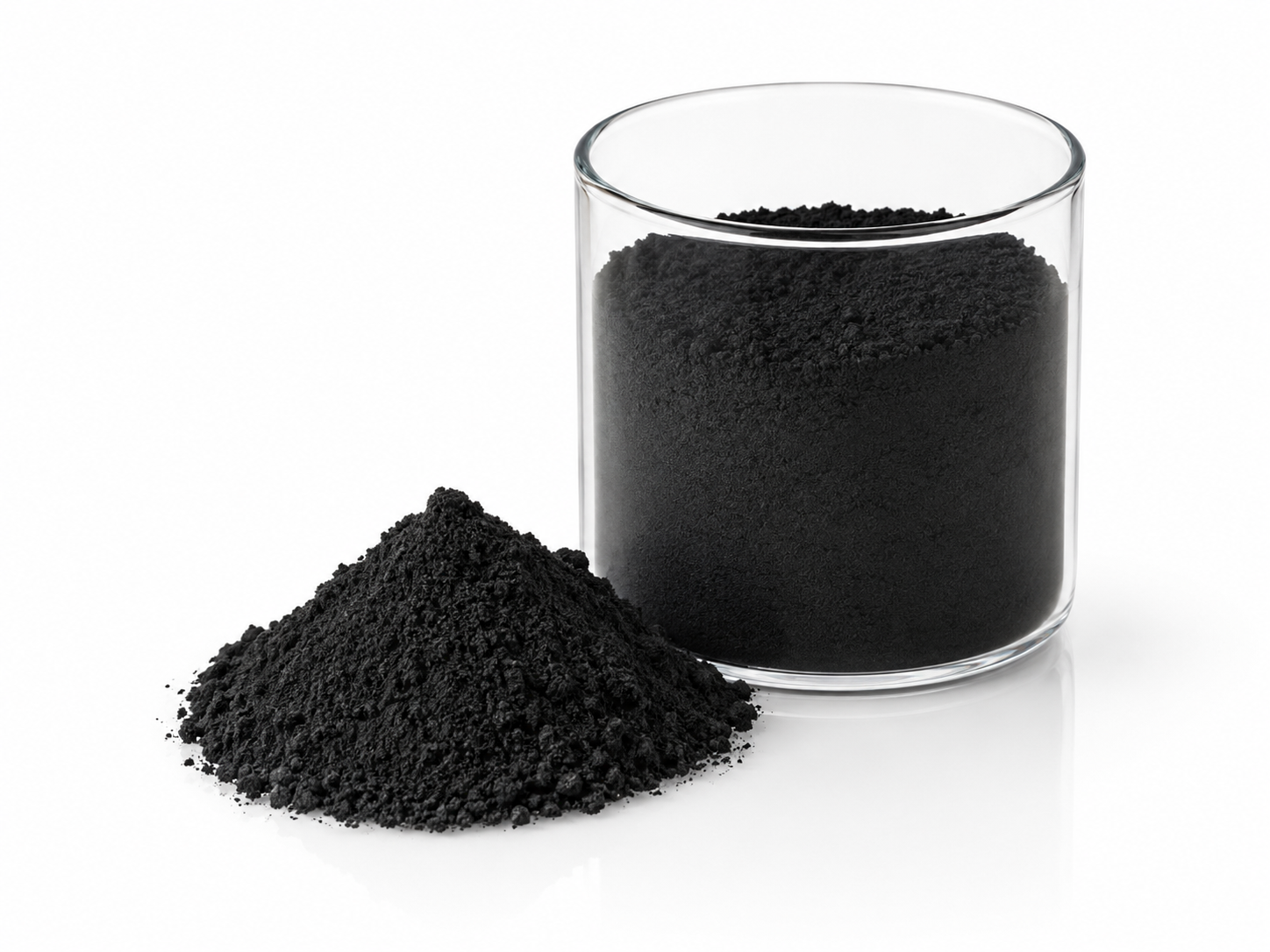
A robust shell keeps the melt sealed inside the particle — no leaking, no migration into the host medium.
The shell holds the chemistry together across thousands of melt–freeze cycles — no separation, no capacity fade.
Tuned particle size and shell chemistry let the material enter a textile, foam, coating, or fluid cleanly.
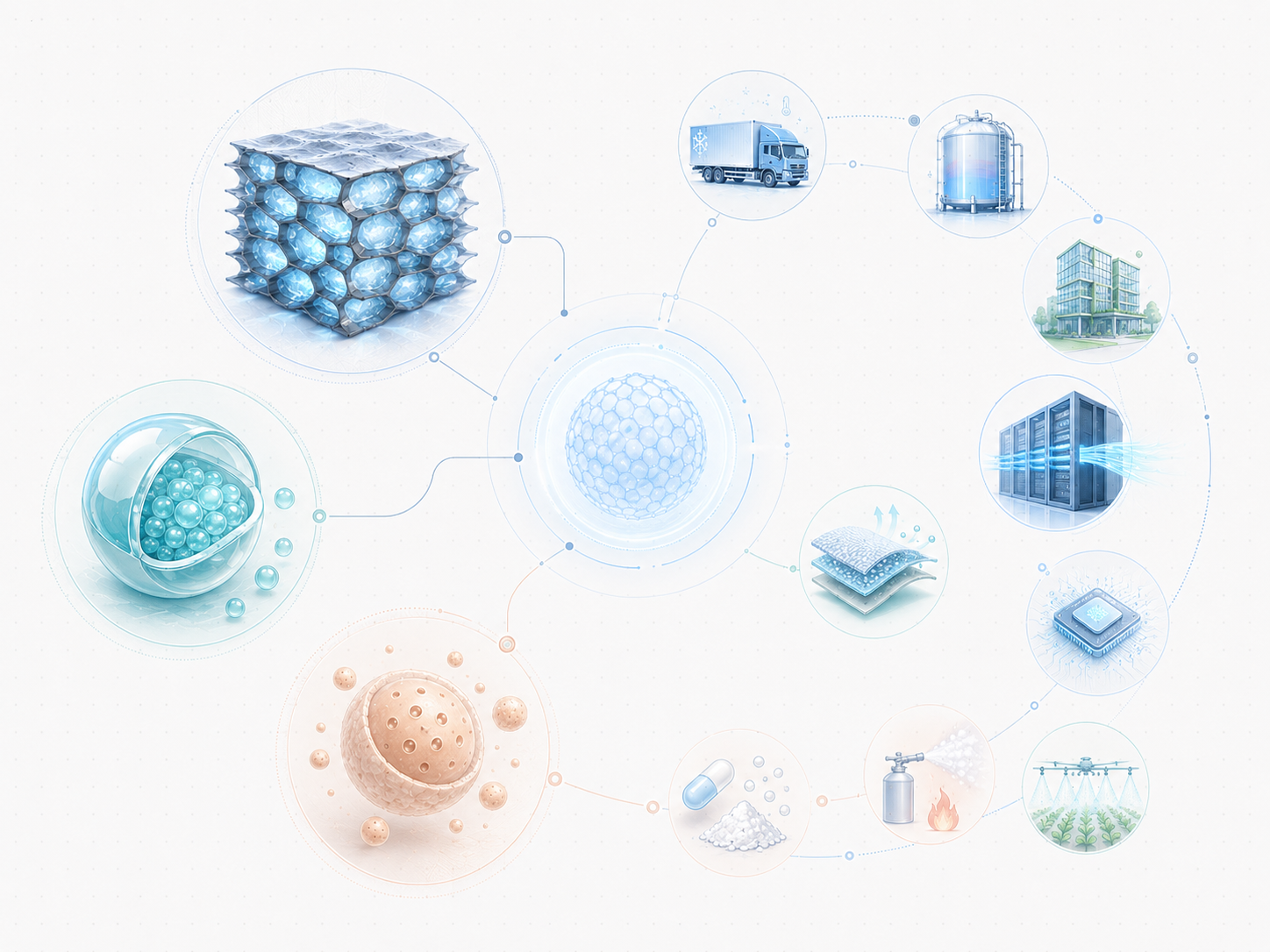
Not a single product — a set of shell chemistries and process controls that wrap many cores at sizes from microns down to a few hundred nanometers.
So we specify the material to your project instead of asking you to design around a catalog item — and hand back the technical data package to build with it.
From conventional microcapsules down to 200 nm encapsulated PCM — chosen to match how the material has to enter your host medium.
Release profile, load fraction, and shell composition are tunable per project — for thermal, agro, and life-science use cases.
PCM, SemiST, and UltraST ultra-high-conductivity shape-stabilized tiers lift conductivity across three chemistries — nine grades available at every phase point.
PCM specified by phase point — nine grades each: three conductivity tiers across three chemistries.
Core-shell encapsulation down to sub-micron sizes — integrates into textiles, foams, polymers, and coatings.
Custom encapsulation with tunable shell, release profile, and load — for thermal, agro, and life-science integration.
Bring your own core — we apply the platform's shell chemistries and hand back a characterized, integration-ready material.

UltraST ultra-high-conductivity shape-stabilized PCM cores and coolant additives engineered into thermal-buffer modules for high-density compute.
Encapsulated PCM as cold-storage capacity that holds temperature through interruptions.
Stable, characterized PCM grades for tightly-bounded temperature windows in transit.
SemiST plates and UltraST shape-stabilized plates — the core component inside every system deployment.
Grade selection by phase point, latent heat, conductivity tiers, cycle-stability data, and encapsulation chemistry.
Particle-size and shell-chemistry selection for textile, foam, polymer, coating, and fluid integration.
How a contract program is scoped — inputs we need, process controls, characterization, and deliverables.